Stories for Slower Futures
By Wong Zihao and Liu Diancong, in collaboration with Cheryl Chung [Tent Futures], and Halogen [the Halogen youth participants of a 2-day futuring workshop]; commissioned by ArtScience Museum, for the exhibition Another World is Possible, at ArtScience Museum, Singapore, 13 September 2025 - 22 February 2026. Special thanks to our studio helpers Sek Yong Jun, Natalie Sim Kay Yee, and Nur Asherina.
Another World is Possible is an exhibition on the future, exploring the practice of world-building across cinema, architecture, design, and speculative fiction. The exhibition reflects a distinctively Singaporean approach to the future, one shaped by long-term thinking, environmental pragmatism, and an ethic of collective responsibility. The exhibition is part of ArtScience Museum’s SG60 season, celebrating Singapore’s 60th anniversary. It is a key event of Singapore Design Week 2025, and is sponsored by the DesignSingapore Council.
[Image below of gallery view courtesy of Marina Bay Sands.]
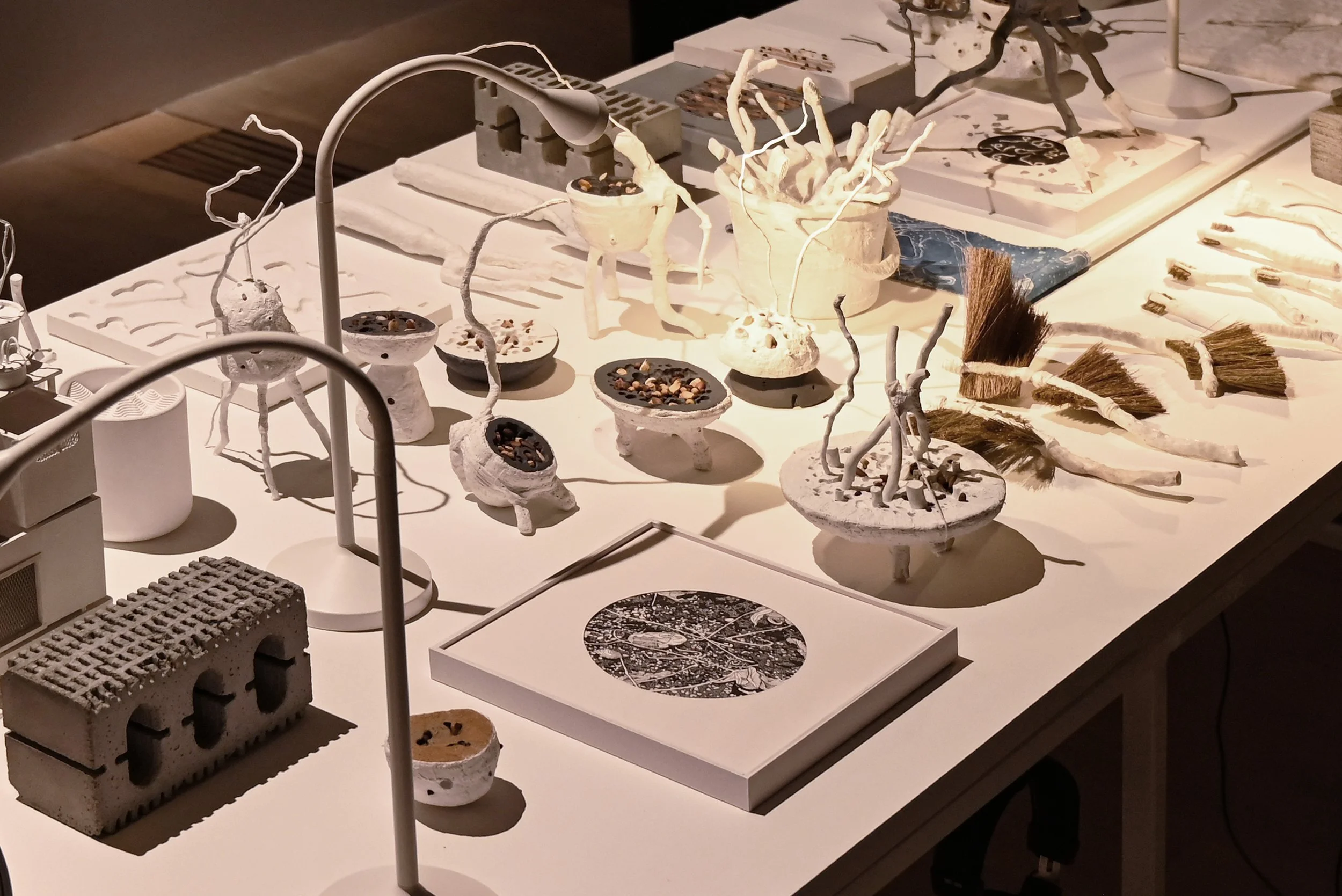
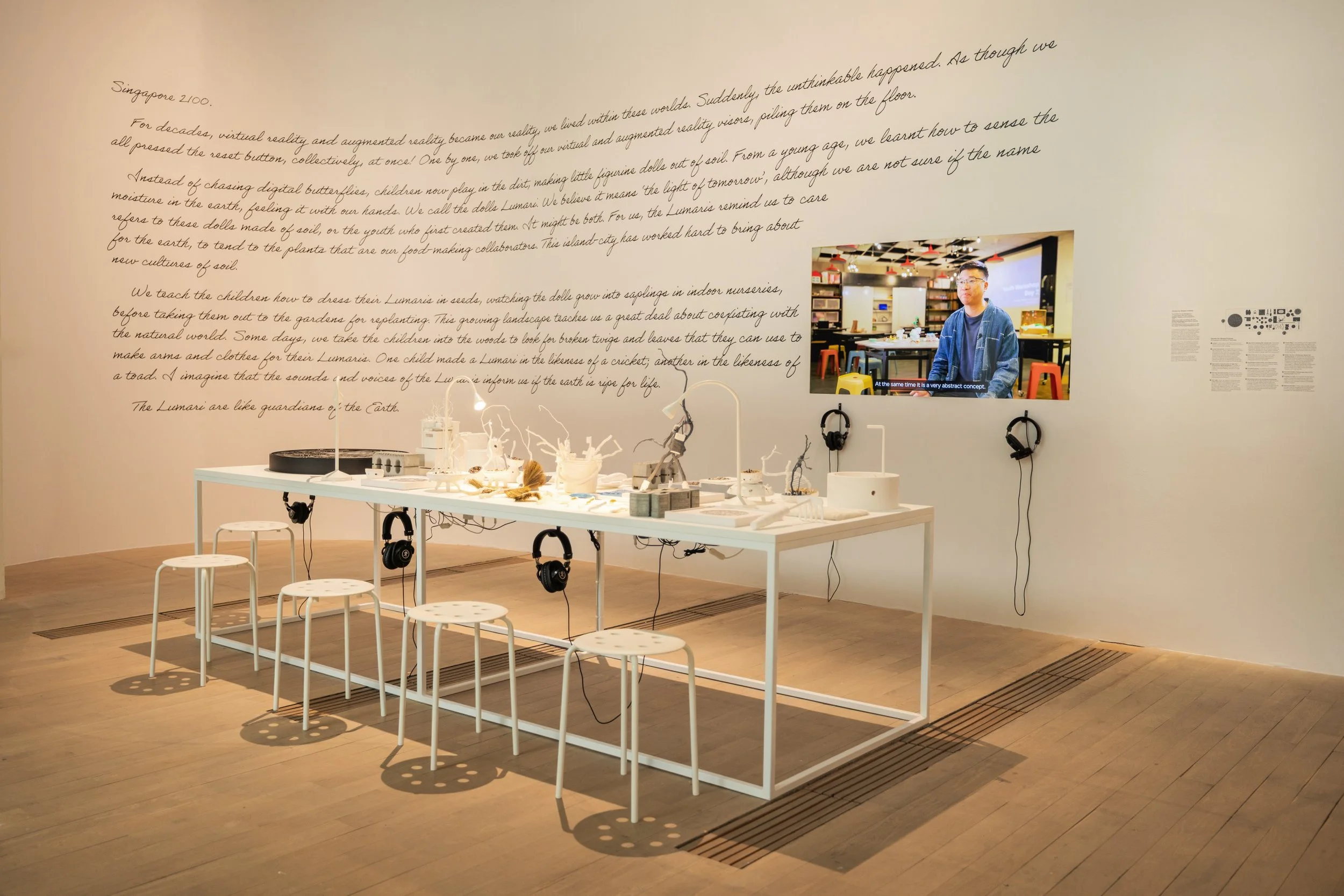
Design meets with artmaking as Superlative Futures assembles an alternative repository of strange objects to imagine how to get to future worlds where things are slower, and humans and natural ecologies might coexist in more balanced ways. Prompted by collaborative discussions and workshops with futurists and youths, the collective expands upon their ongoing design-research speculating new urban practices of ecological care. The table presents a curious collection of speculative artifacts and design prototypes, hinting at designs and designing processes of “what-if- scenarios” and “what-could-be- stuffs”. The artifacts are not meant to solve the entwined issues of environmental and emotional/mental precarity; rather they invite their viewers to pause, be curious about the stories that the objects tell, and probe into the open-ended possibilities of slower, and more primitive futures.
______________________
Featuring the stories of the youth:
01. Lumari
“Singapore 2100. For a long time up till now, Artificial Reality got so real that we were living in it. Then the unthinkable happened, it seemed as if everyone pressed the reset button all at once! One by one, people took off their visors, piling them on the floor. Instead of chasing digital butterflies, today children play in the dirt, making little figurines out of soil. From a young age, I learnt how to be adept at sensing the moisture in the earth, feeling with my hands. We call the dolls Lumari. I think it means ‘the light of tomorrow’, although I am not sure if the name refers to the dolls of soil, or the youths. It might be both. But at least, the name is also a way of imagining how we care for the soil in the ground, and how to tend to the plants that are our food-making collaborators. It seems that the island-city has worked hard to bring about new cultures of soil.
I teach the children how to dress their Lumaris in seeds, watching the dolls grow into saplings in indoor nurseries, before taking them out to the gardens for replanting. We teach planting knowledge as part of play time. The landscape teaches us a great deal about coexisting with the natural world. Some days, I take the children into the woods to look for bits of broken twigs and leaves that they can use to make arms and clothes for their Lumaris. One child made a Lumari to look like a cricket; another reminded me of a toad—I like to think how the sounds made by these creatures tell us if the grounds are wet enough for the Lumaris. They are like earth guardians, taking part in little rain rituals.”
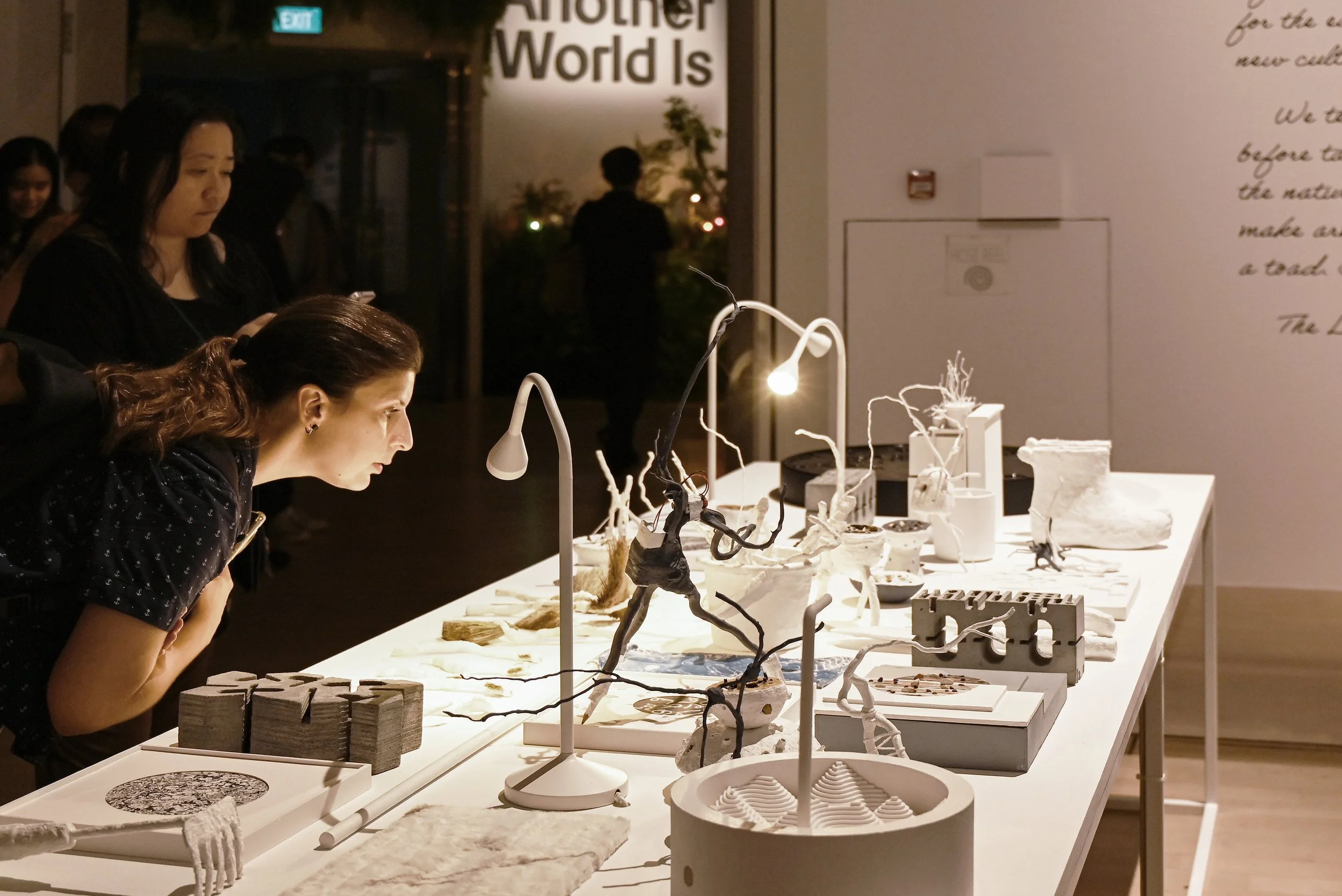
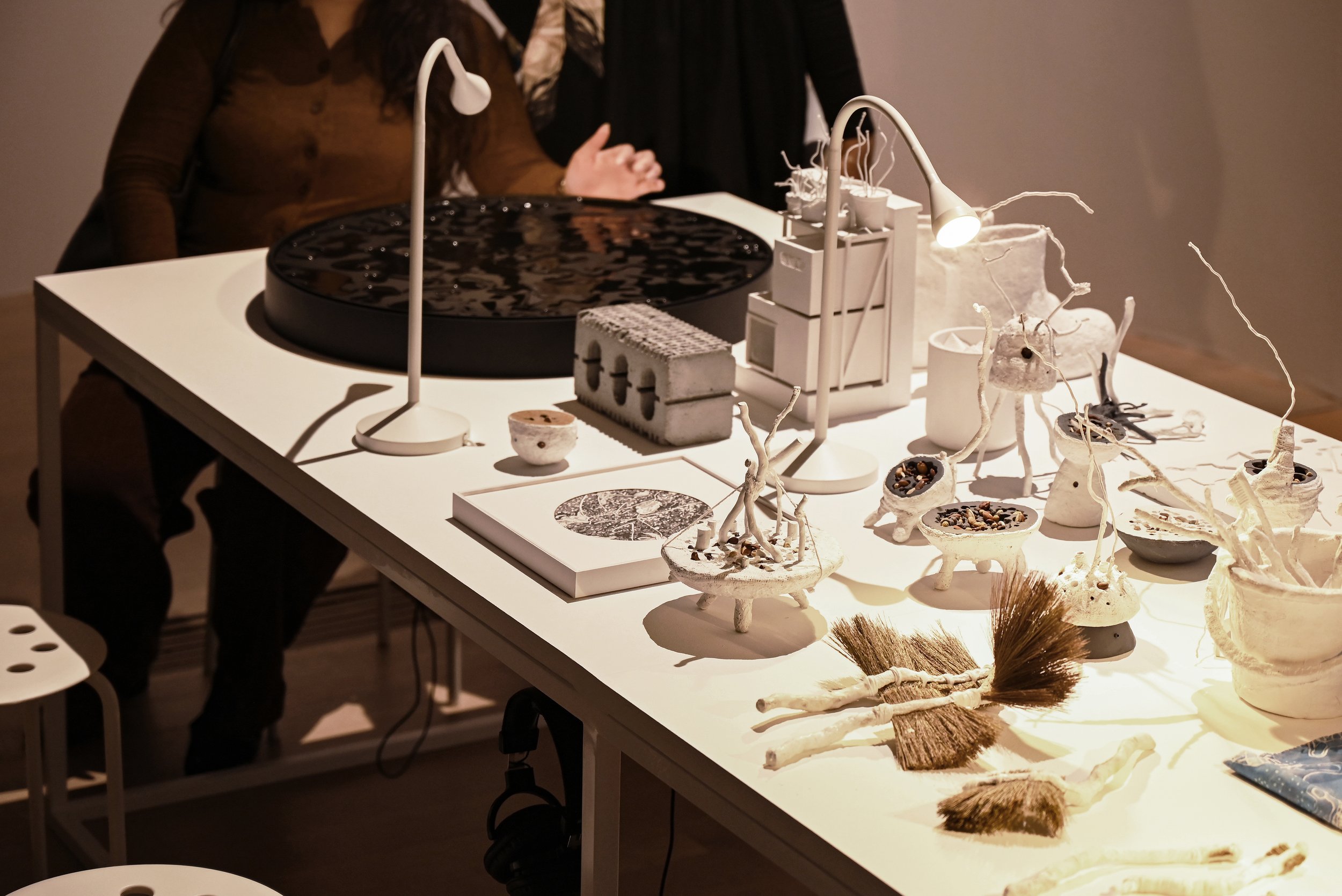
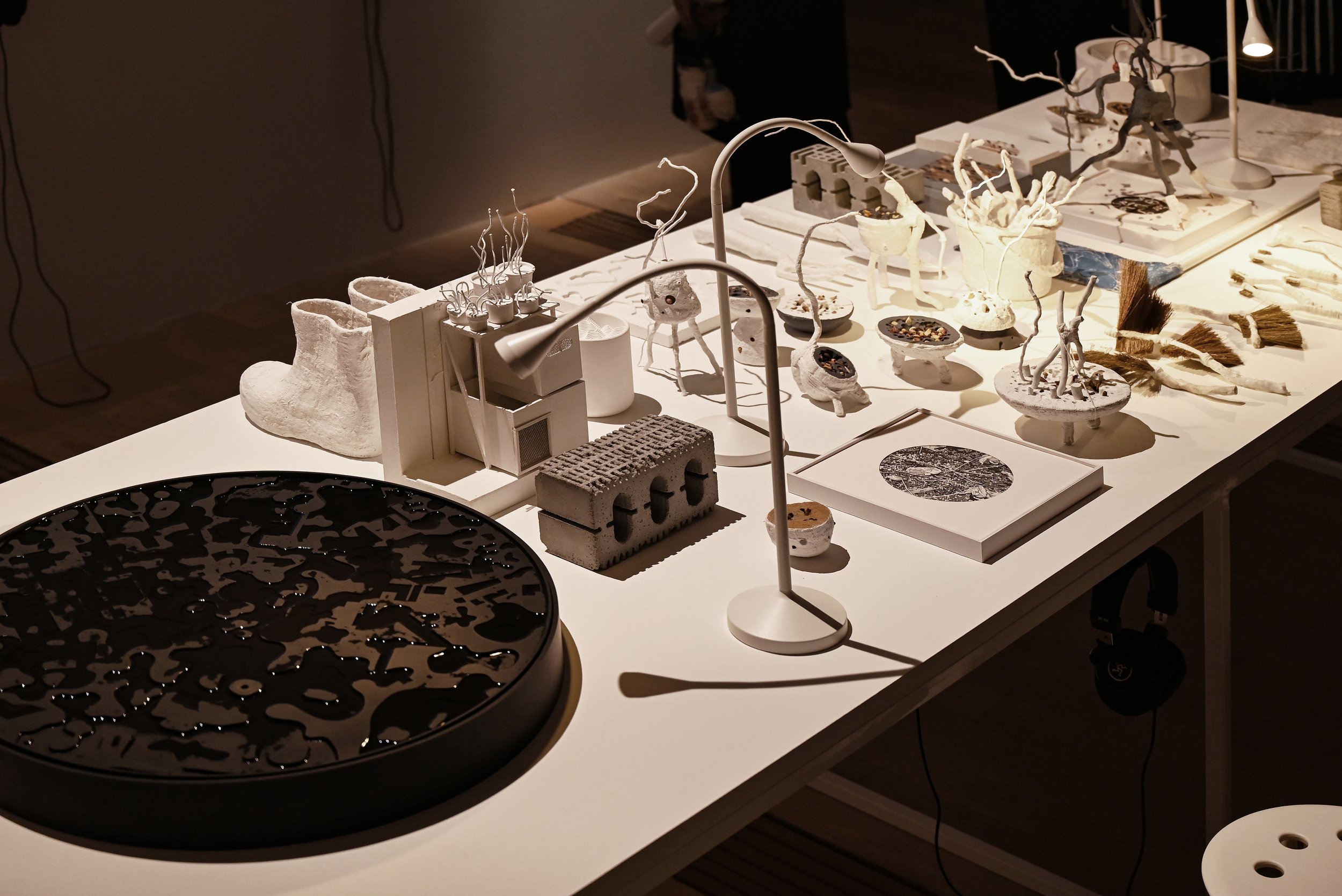
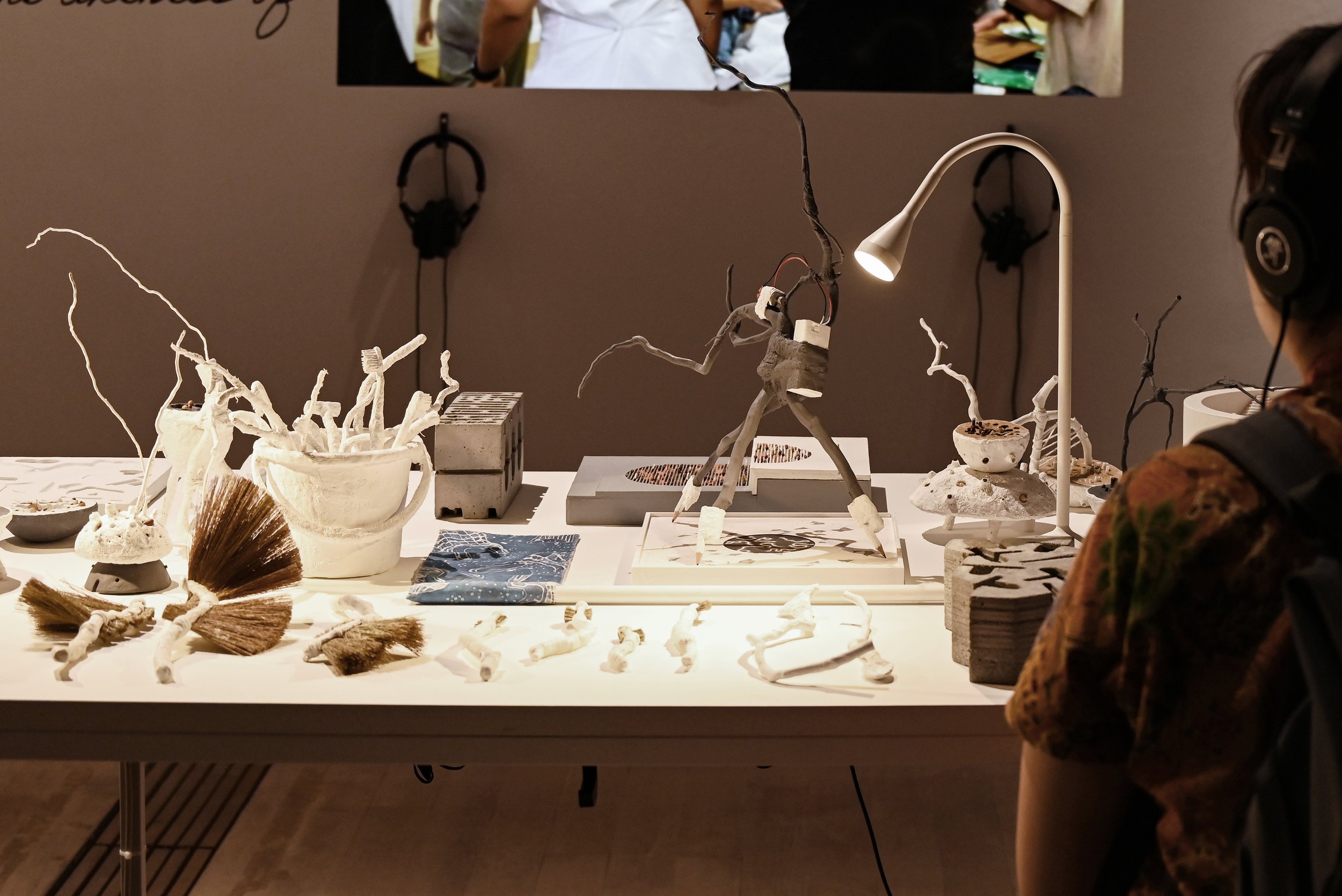
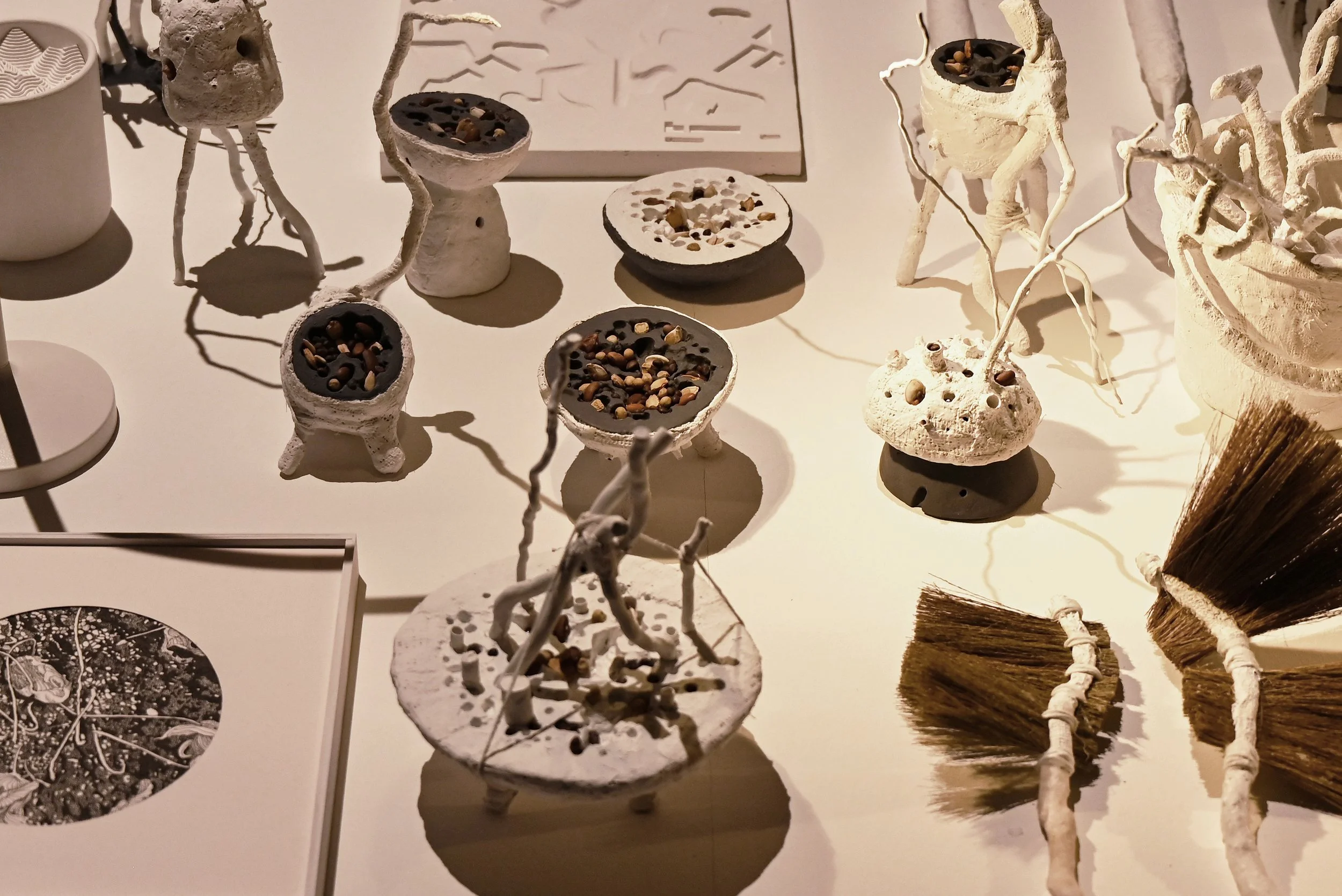
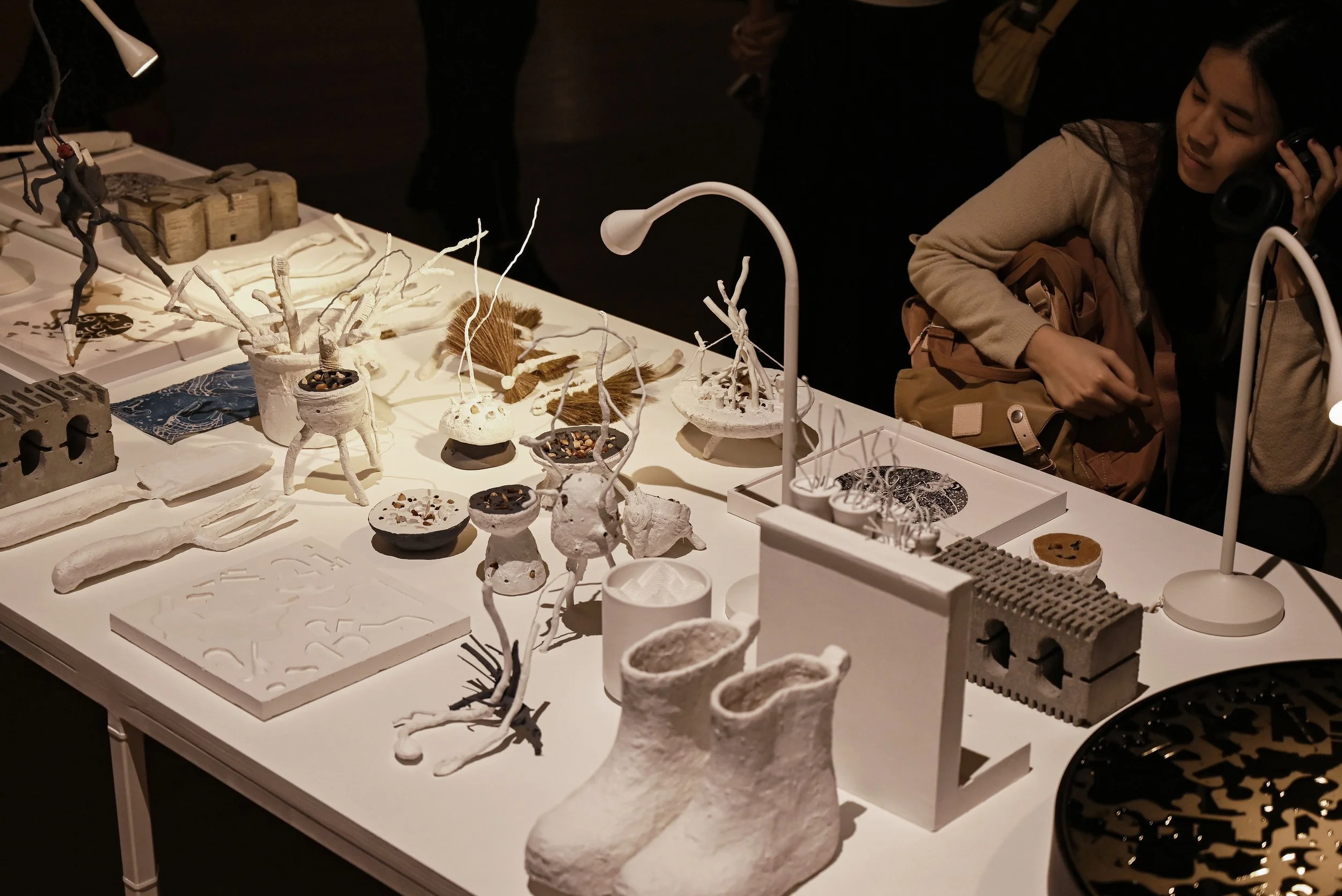
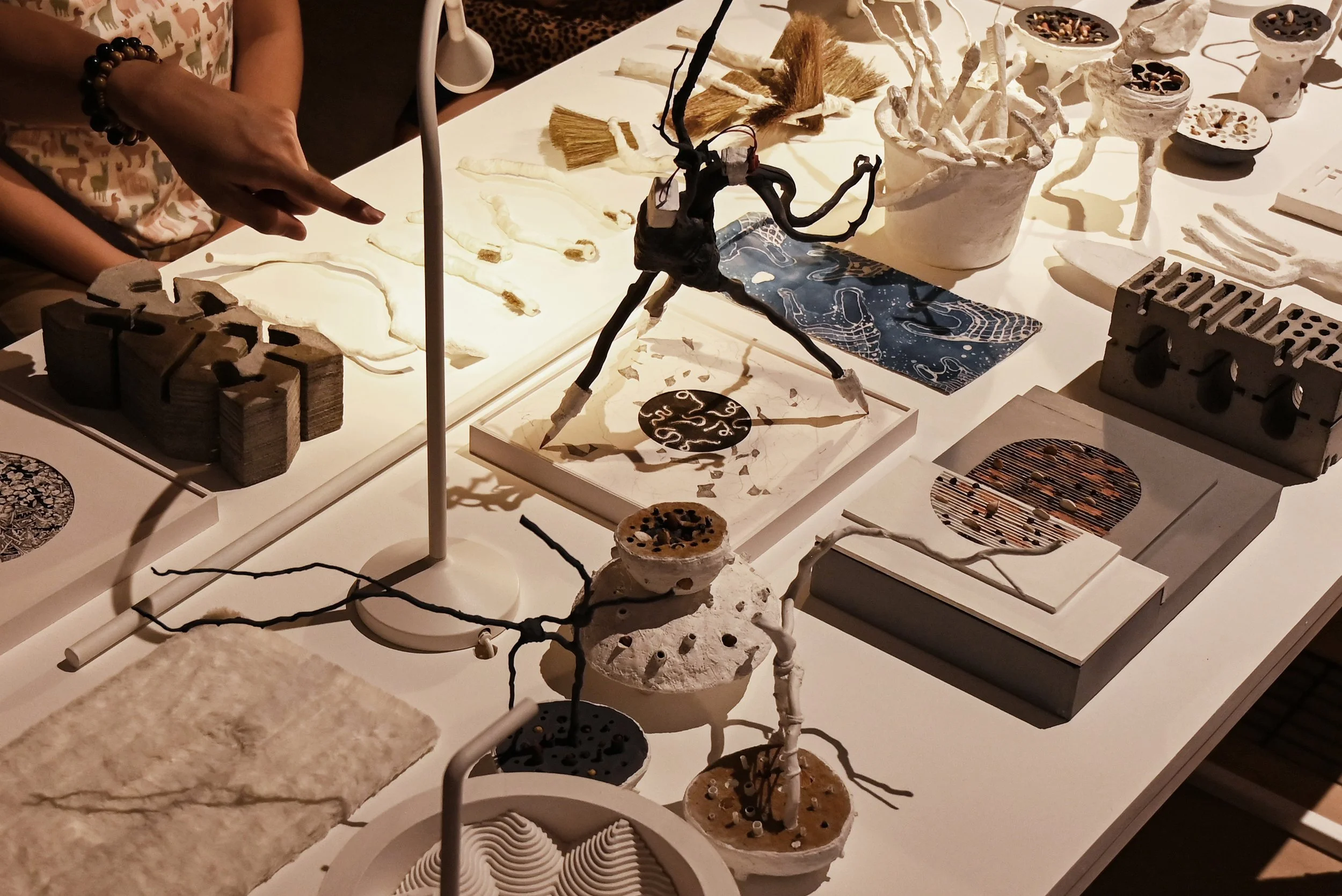
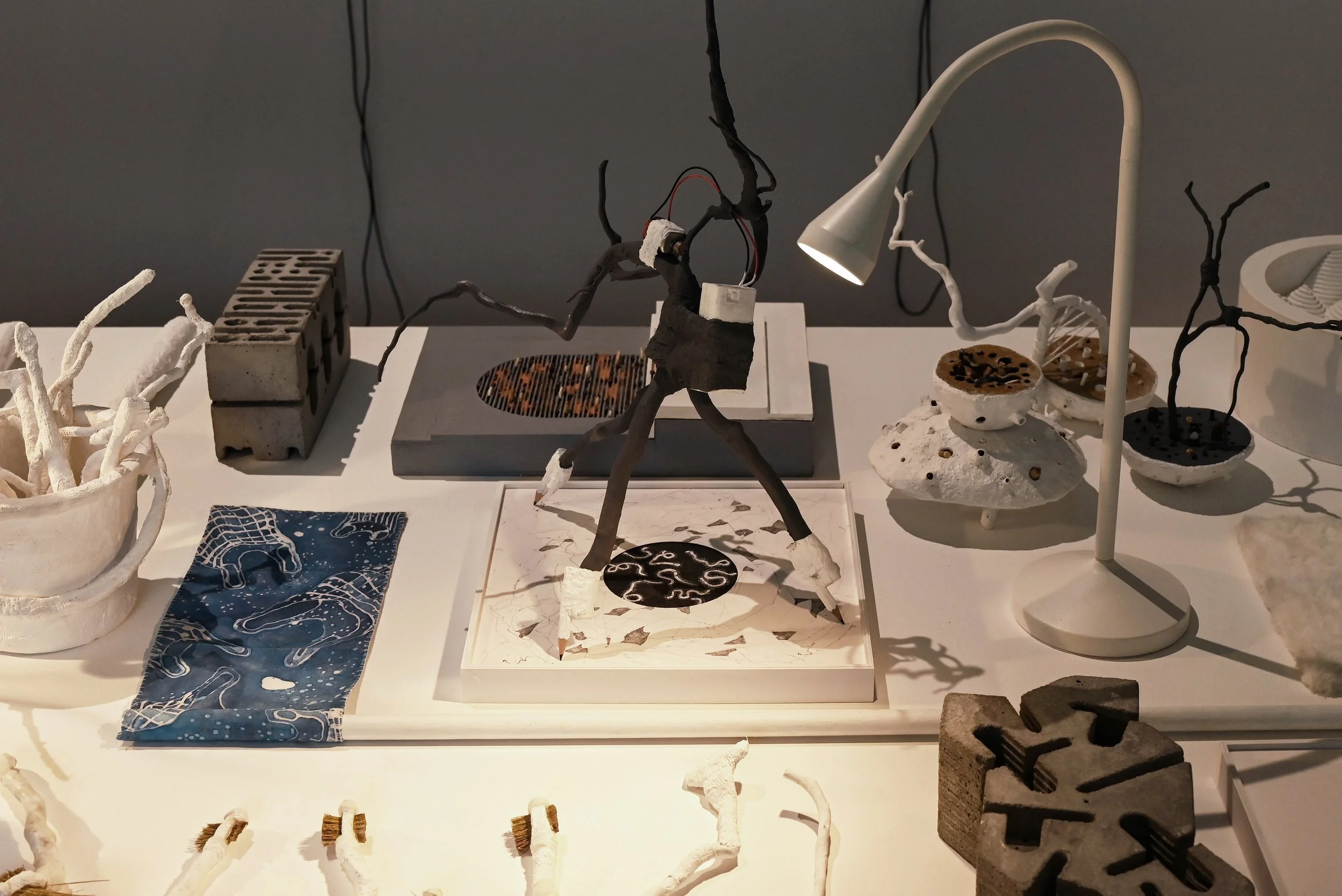
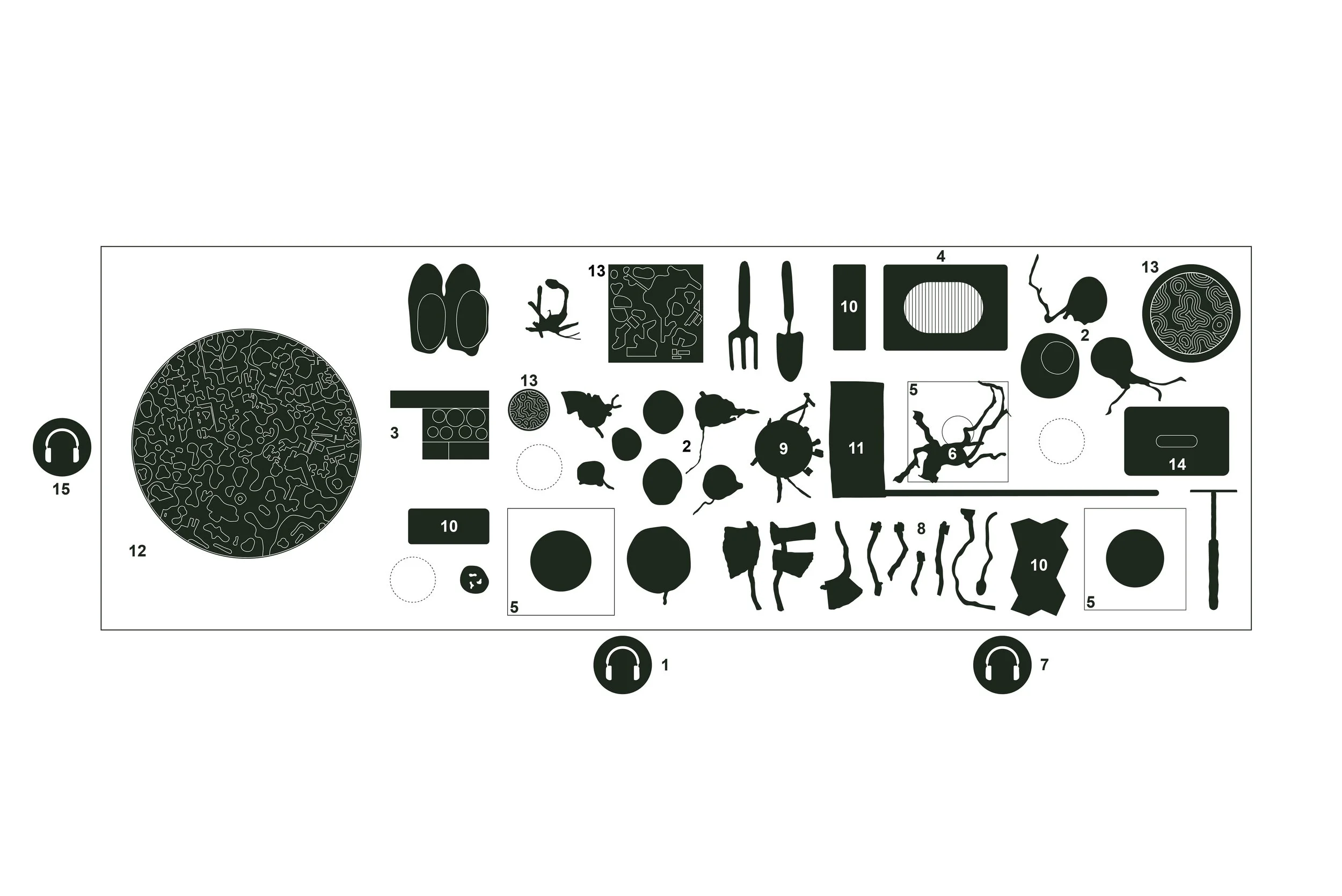
An Inventory of Artefacts to Think With
1. Lumari. A story about the “light of tomorrow” where children grow up with newfound cultures of soil, and of earth-making.
2. Lumari specimens. Lumaris invite us to think—like children do—about different ways to design and craft for the more-than-human worlds of plants and animals. Some function as play structures for animals, and others as seed stores. Small animal archivists, like birds, can help contribute to future seed archives. Others play the role of distributors, scattering the seed collection throughout the landscape.
3. Speculative reconstruction of high-rise farming from 1960s Singapore. A corridor of a high-rise housing block, and attempts at chicken and duck rearing, perhaps a model to revisit.
4. Soil trap and seed archive. Patterns on the floor help collect soil and seeds caught in the rubber soles of passing human feet. Humans become unknowing seed archivists.
5. Soil maps. Close-up views of future grounds. Unlike maps and masterplans which envision the future seen from a distance, here is a different “map” showing how to get to more ecologically balanced futures. The views train our eyes on the place of soil, positioning garden-making as central to future ecological wellbeing and emotional health.
6. Device for drawing like mangroves. The future of the island-city will be lined with mangrove forests: ecological aids to the engineered seawalls working to keep the city dry from the rising seas. Mangroves are messy ecosystems, unlike our imaginations of the garden. Will we need new ways to design with the mangroves?
7. More Than Us. A story about future cities where humans and more-than-humans co-exist in more balanced relations to safeguard planetary resources.
8. Handmade toothbrushes, and other brushes. Driftwood handles, broomcorn bristles, twine for securing, wax to waterproof.
9. Fossilized plastic. A collection of fossilized plastic artefacts by a future archaeologist. The artefacts recall plastic’s origins in fossil fuels, derived from the ancient mineral ground, proposing a rethink of plastic disposables as assemblages of “rare” earth materials.
10. Becoming coral: brick and paver prototypes. Coral reefs will be regenerated as part of future coastal defenses against higher tides and stronger currents. The calcium carbonate in concrete structures provide natural grounds for coral larva to anchor. The concrete bricks and pavers of urban architecture can also house future reef inhabitants.
11. Ocean flag. On the evening of 29 August 2025, a speculative intertidal walk was held in the city center. The guides made a flag to show a future (or perhaps present) sea where floating plastic debris make up a complex ecosystem in a weathering world shared with more-than-human collaborators.
12. Water mirrors: a landscape device for slowing down. A device that recreates the temporal mirrors of water encountered with tidal rock pools, formed by the alternating flooding and draining of the landscape as if shifts from high to low tides and then back again. A different landscape temporality offers momentary respite from the city, and an invitation to slow down and rethink the pace of future worlds.
13. Process studies of landscape devices for slowing down. (See 12.)
14. Puddles on rugs. An invitation to think about wetter futures and weathering cities, and more common occurrences of leaky roofs, soaking boots, flooded interiors, and water-stained furniture.
15. Matcha and Rain. A story about wetter futures, but also how in mitigating the uncertainties of this precarious weathering world lies possibility for new practices for slowing down.