New Practices for Tidal Attunement
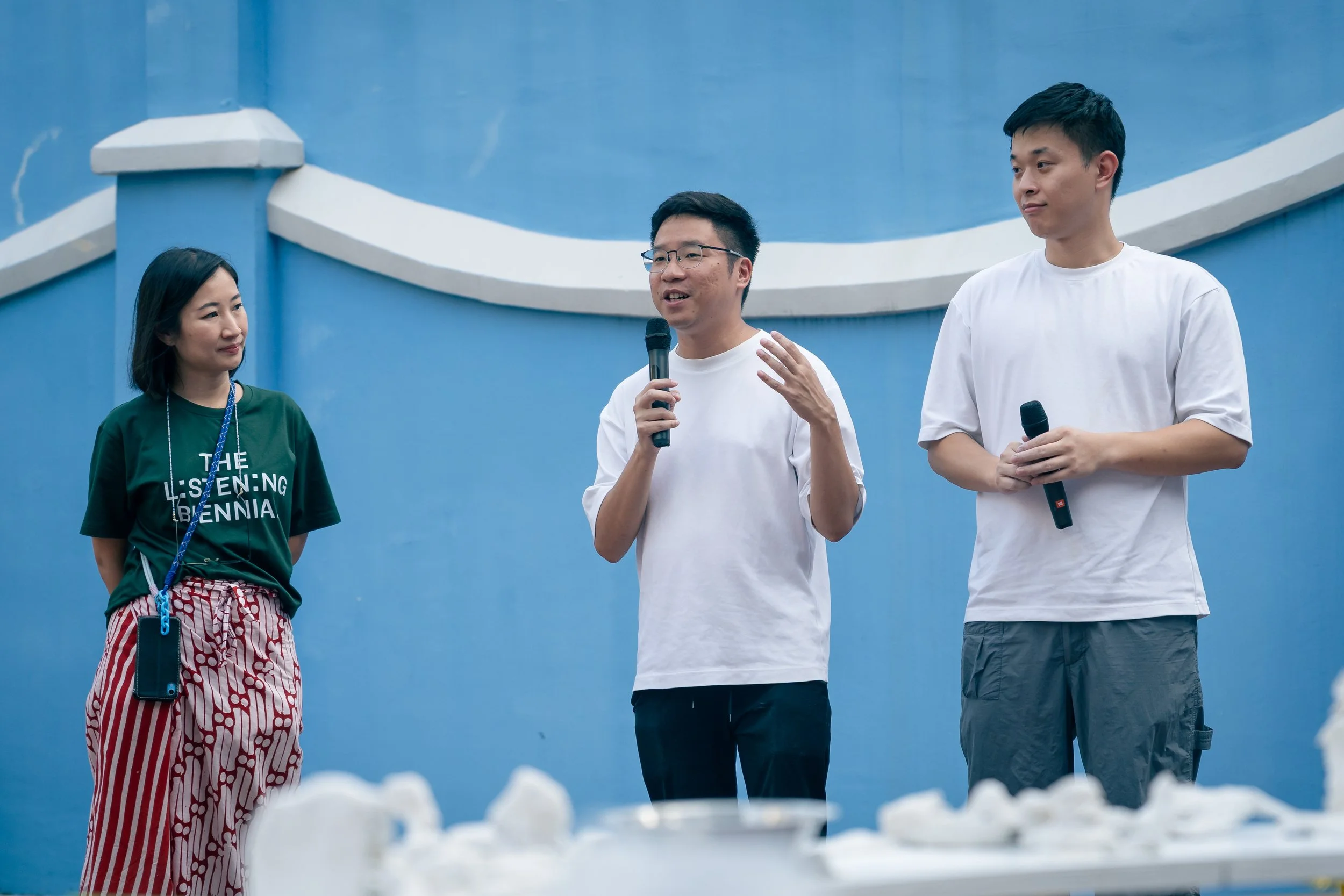
By Wong Zihao and Liu Diancong, in collaboration with curatorial partners and biennial programmers: Alecia Neo and Kahgay Ng. Installation and workshop at 42 Waterloo Street, for the Listening Biennial 2025 (Singapore), and part of Singapore Night Festival, 22 August - 6 September 2025.
Responding to the theme of “Third Listening”, Superlative Futures was invited to further discuss their work during the Listening Laboratory at LASELLE, and presented by the McNally School of Fine Arts, 10-15 September 2025.
Special thanks to our studio helpers Sek Yong Jun, and Natalie Sim Kay Yee, and the wonderful team of gallery assistants supporting the Listening Biennial. Images courtesy of Hoong Wei Long, Poh Yu Khing, and Superlative Futures.
Superlative Futures takes the site of 42 Waterloo Street as a point for creative departure. The installations prompt more careful attunement to the weathering world, bringing the shifting tidal edges of the island into the city. We speculate with meanings of wetness to evoke a different imagination of dry, interiorized city centers, through the sounds of monsoonal downpours, mangrove ecologies, urban floods, architectural leakages, and not least the slippery and soaking grounds of former coastlines or padi terrains—or whichever watery landscapes that Beras Basah (which means “wet rice”) conjures in its namesake.
Three artworks trace alternative urban practices for attuning with tidal temporalities whether wetting and drying, soaking and draining, eroding and sedimenting, to recall the intertidal zone’s shapeshifting temporalities of land-water transformations. The sound-based installations conjure the ghostly natures of tidal landscapes that are revealed in the moon-lit night. Alluding to the experience of walking in the dark as one trespasses into a mangrove forest at night, we hope you find yourself getting lost in all this weathering madness, and for a moment—however brief—forget the tempo of the surrounding city.
________________________________________
01. Finding Putuo
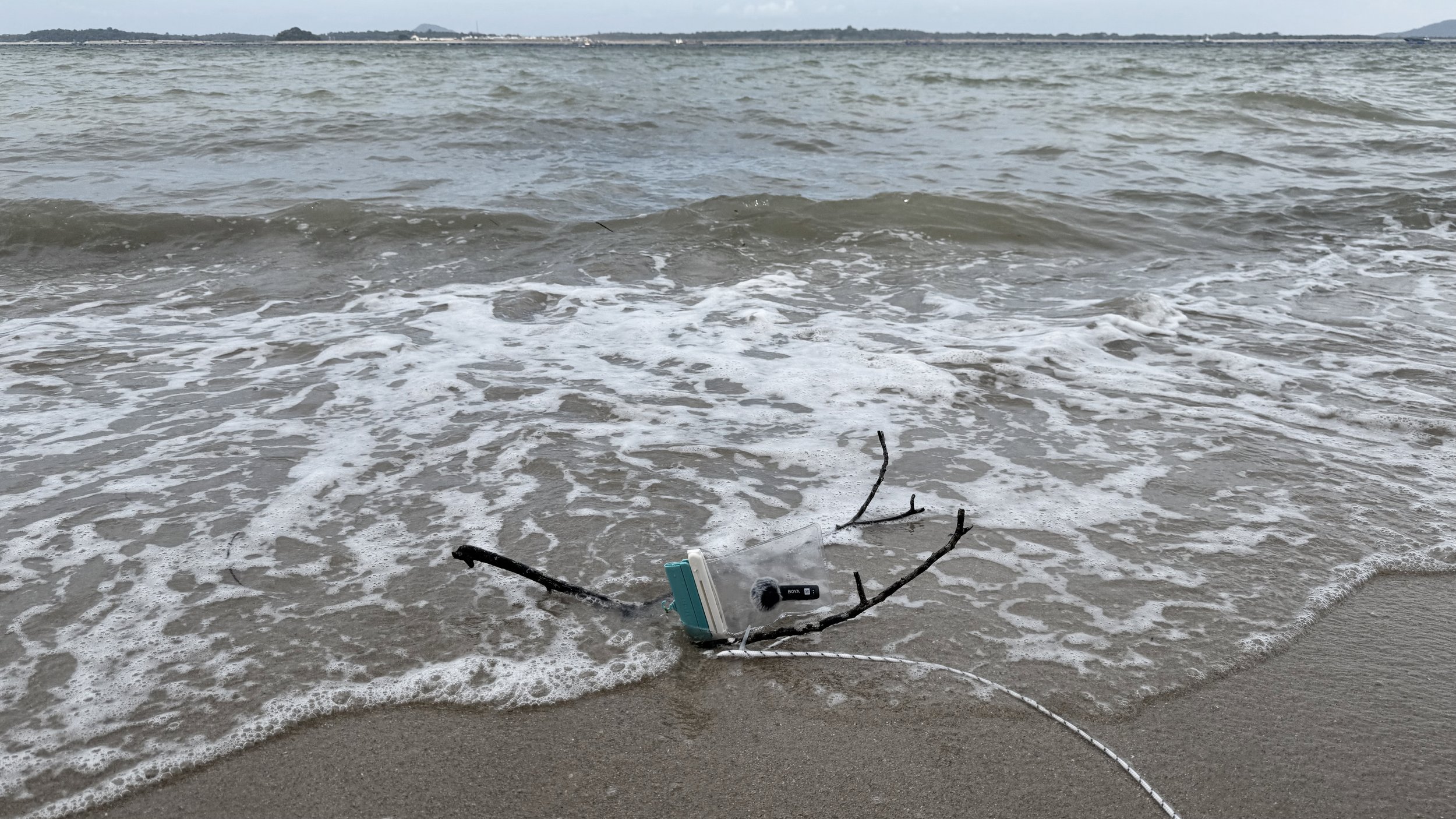
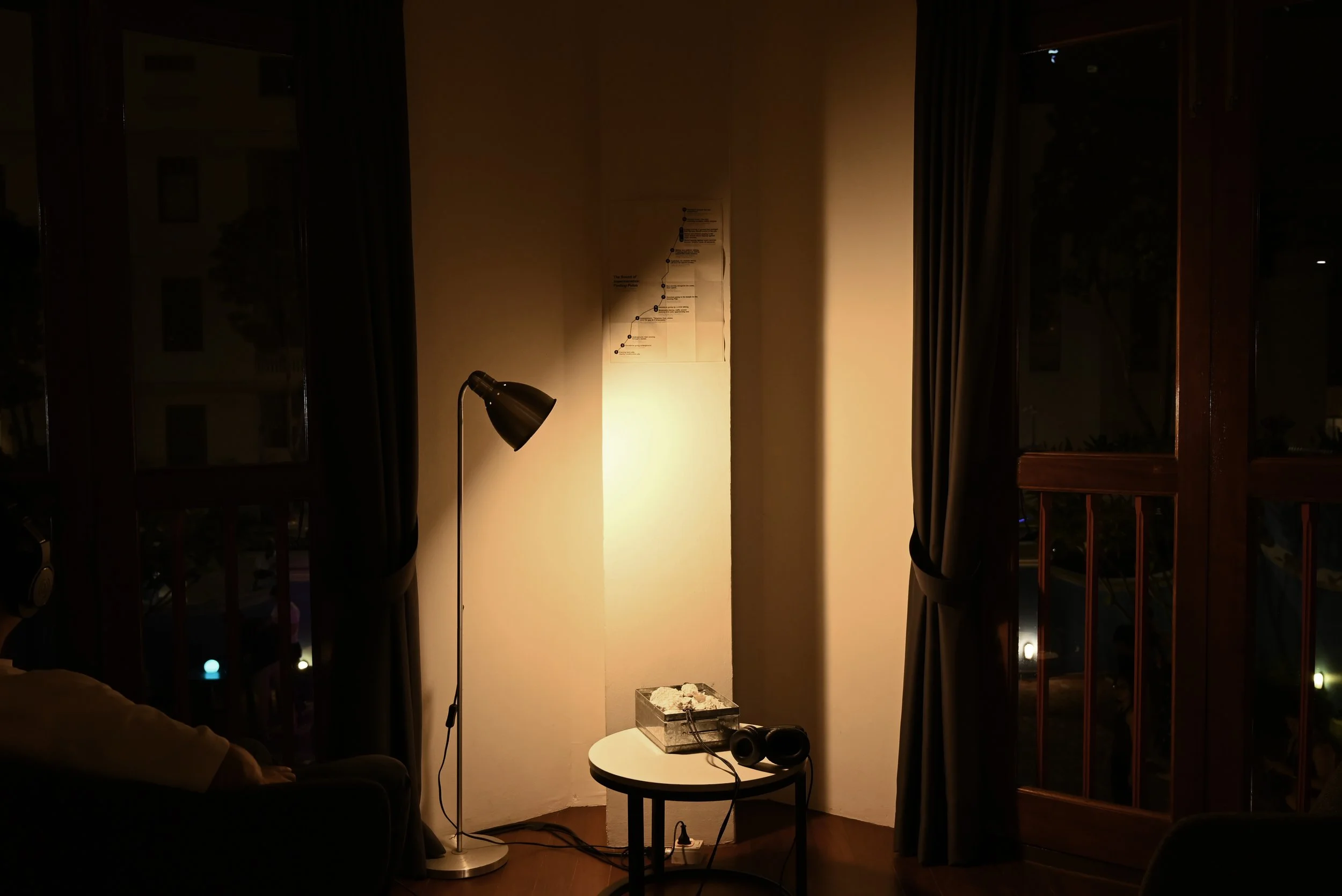
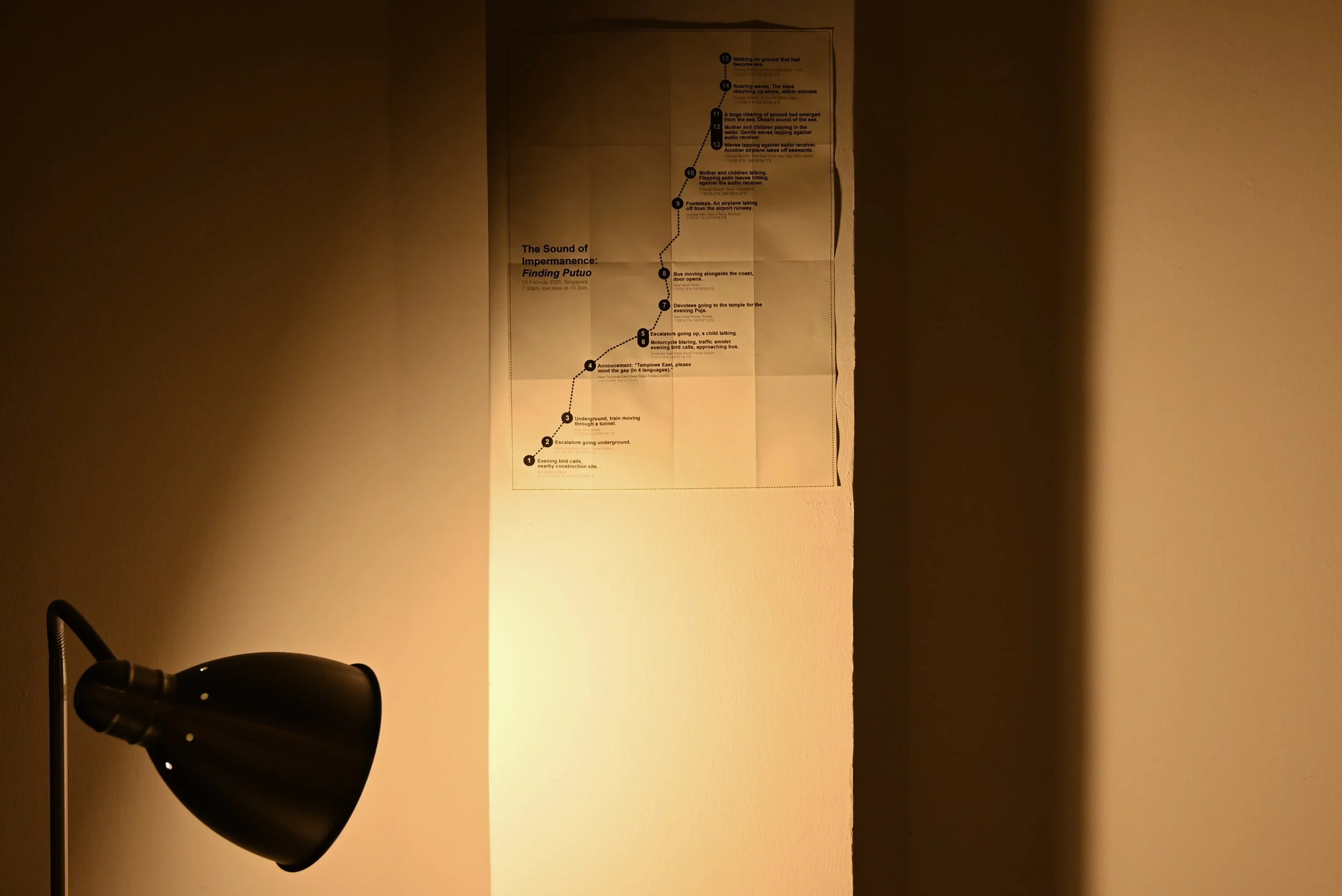
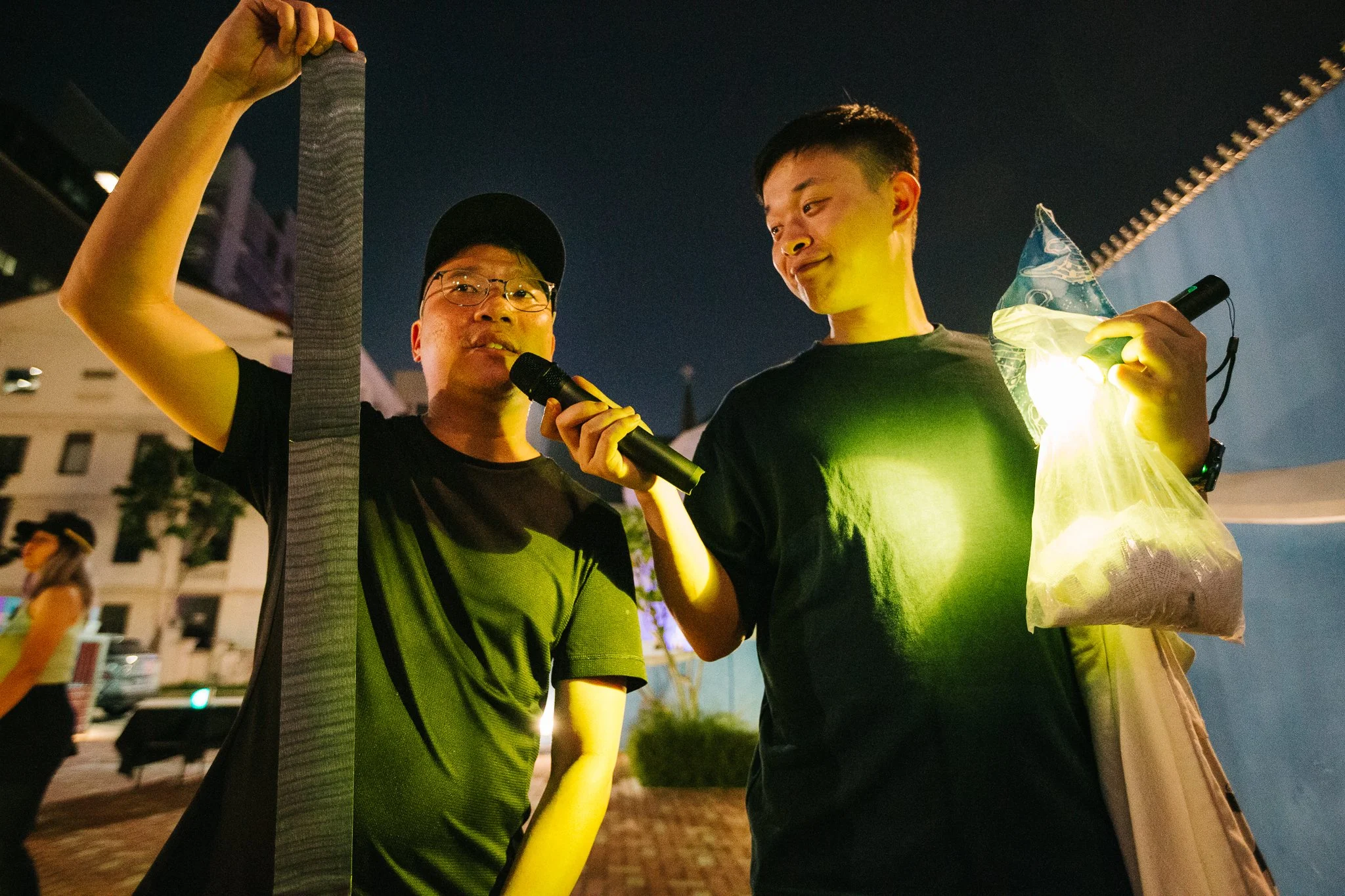
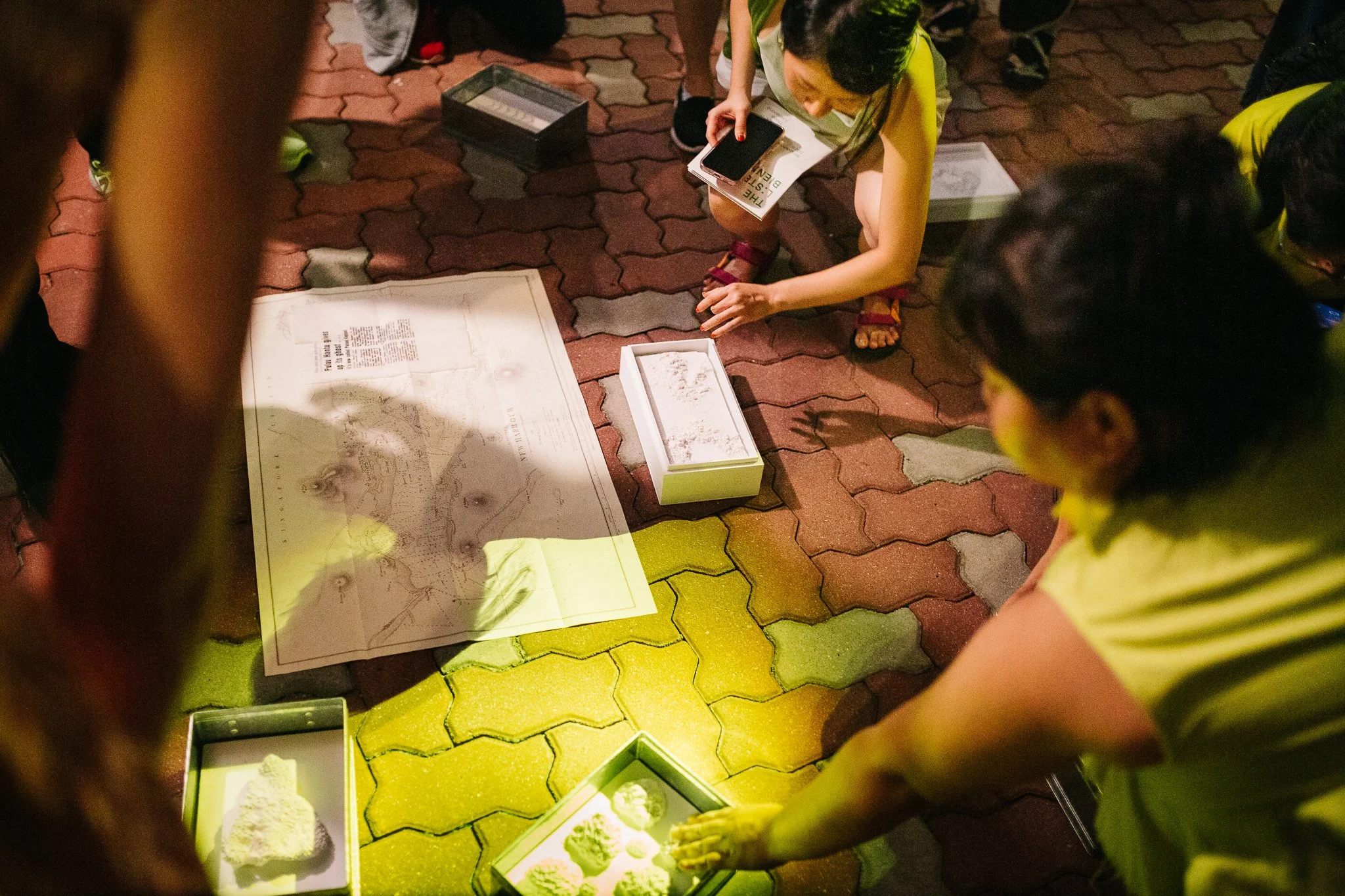
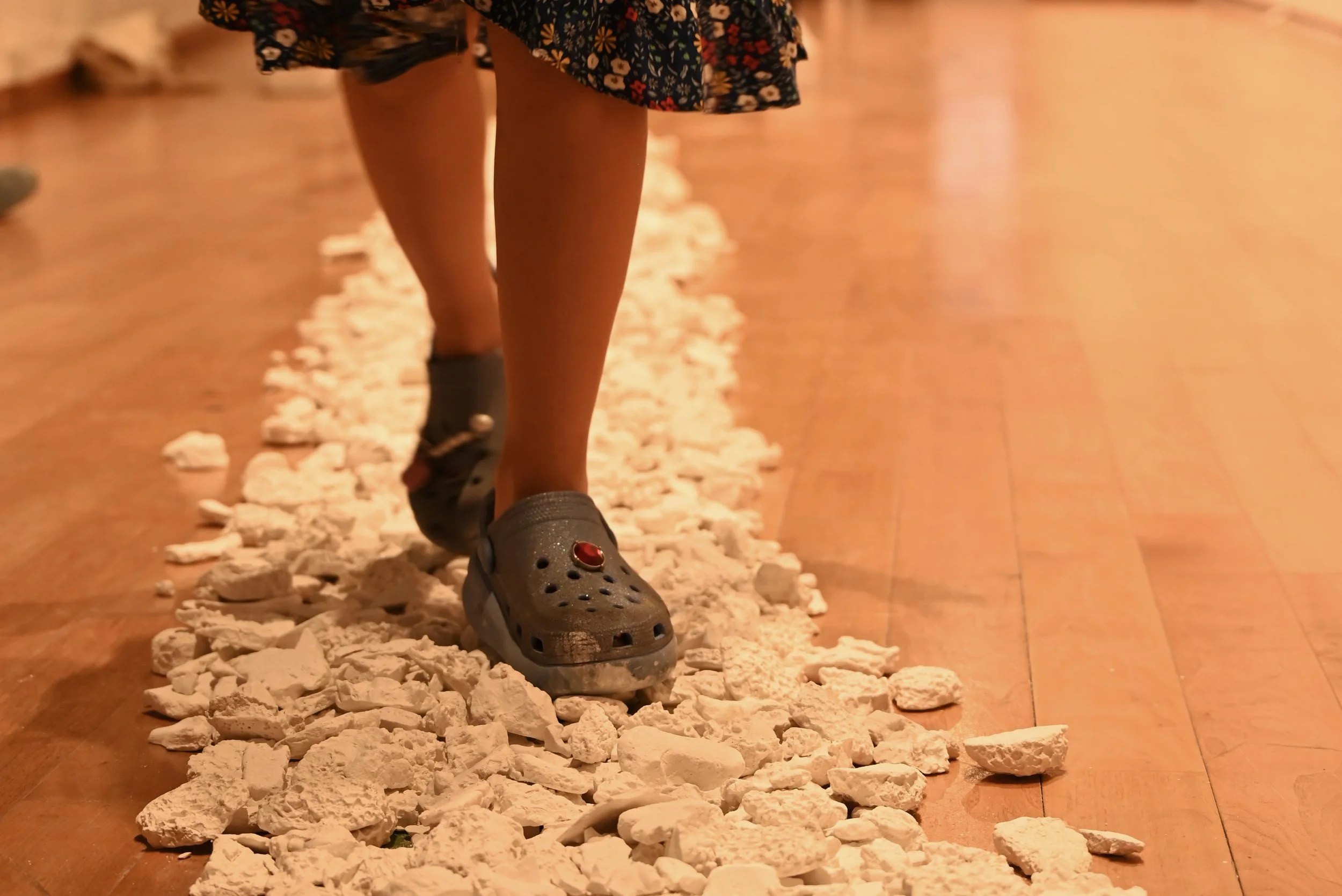
Collaged sound tape, 15mins. 2025. The installation includes a line-map of minute-long sound samples the artists took as they moved from 42 Waterloo Street to the intertidal coast at Tanjong Changi during the springing low tides. Tanjong Changi was where both artists first experienced the intertidal zone—Wong in 2021, and Liu in 2024—hence beginning their interests in the shifting landscape.
15 February 2025, Singapore.
7.30pm, low tides at +0.30m.
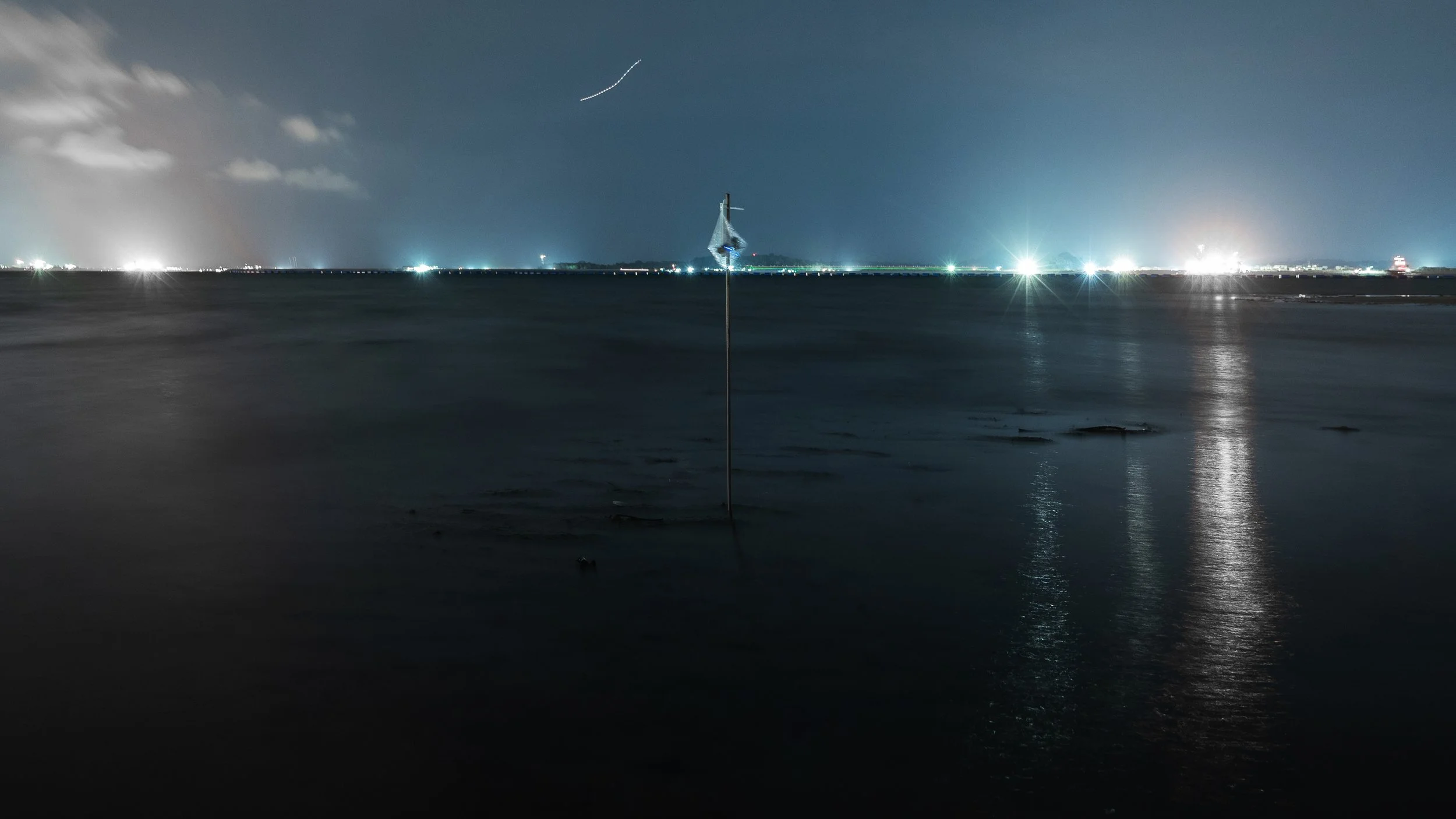
We left the city in the hope of finding Putuo—but not the geographical place of the mountain (that is also an island) as the name refers to. Instead, it was a metaphorical Putuo that we found in the shifting edges of an intertidal landscape that comes visible in the low tide once or twice a month. The rhythmic sound of the tides receding and then returning up-shore recall the cave at the foot of Putuo where the changing tides could be heard. It was there, as a story tells, that the Bodhisattva Avalokiteshvara Guanyin (whose name translates as the “Observer of Sounds”) gained enlightenment by listening to the coming and going of the tides.
Finding Putuo (2025) is a 15-minute soundwork looping in a cyclic recounting of the artists’ bodily translocations from city centre to coastal periphery. When the tides become audible, the grounded-ness of the concrete-city dissolves underfoot to muddy material impermanence. The artwork is a call to pause and observe the sounds of the tides amidst daily life. Each coming and going is an opportunity to find our little Putuos.


02. Weathering the Blue House
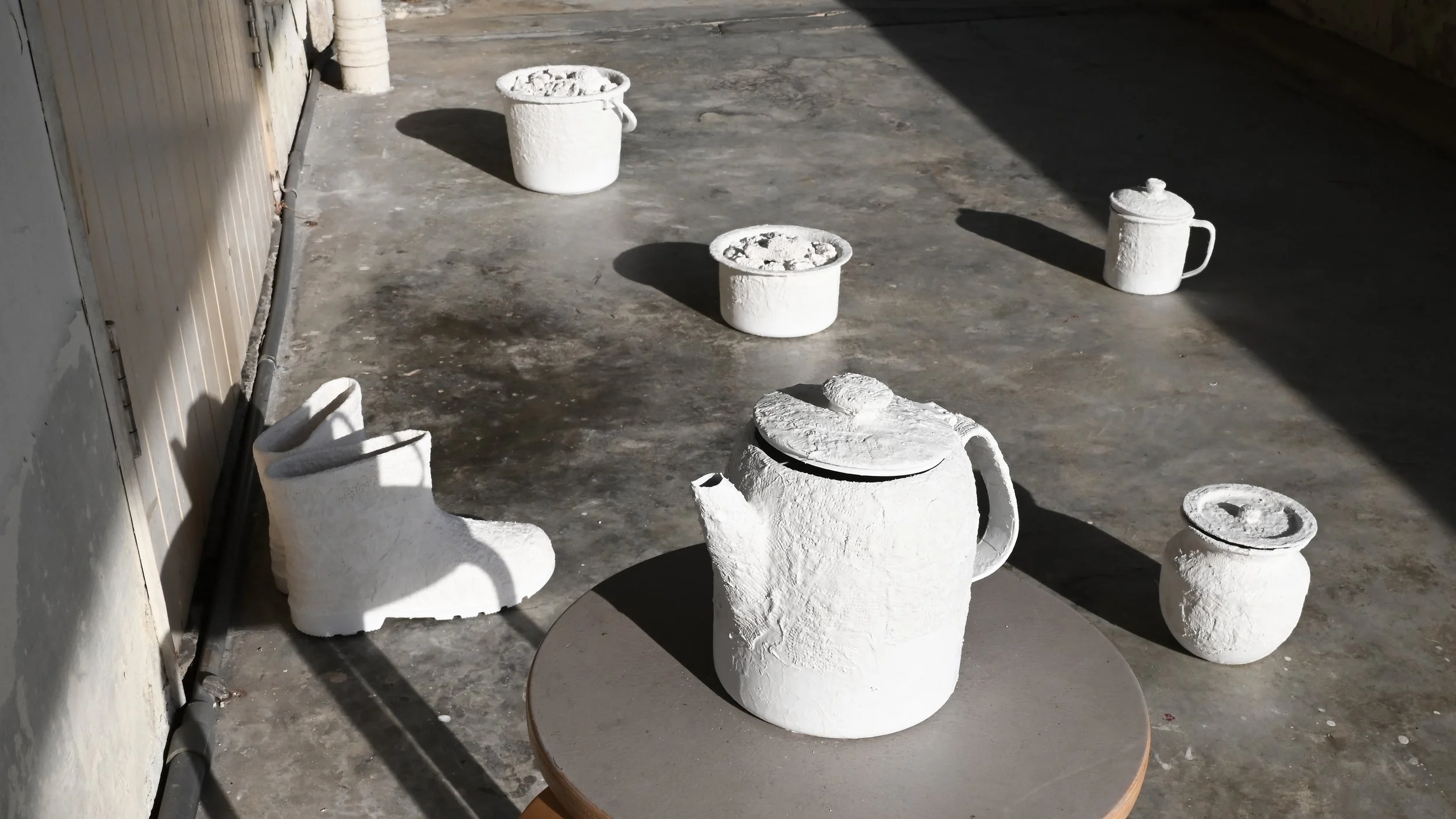
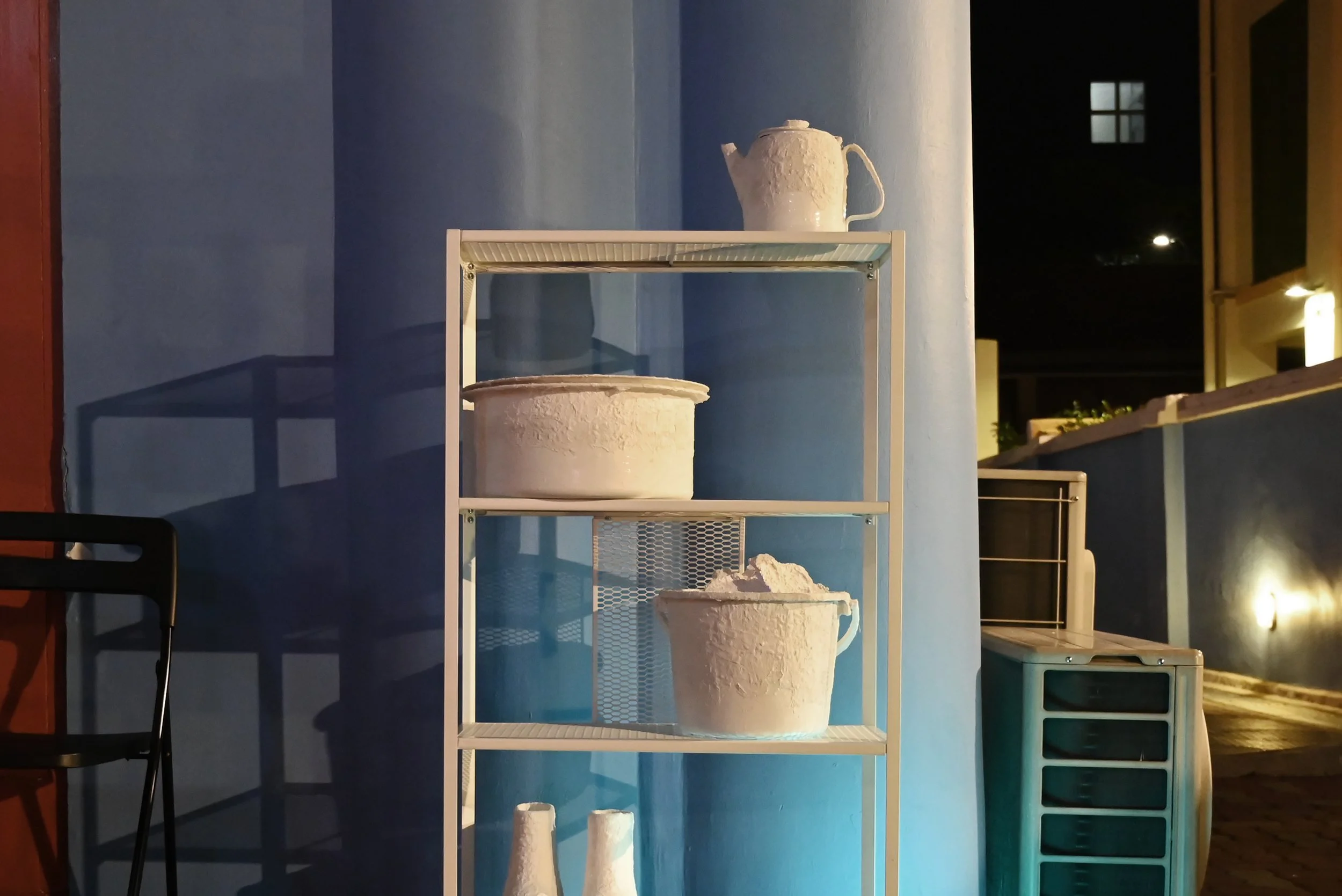
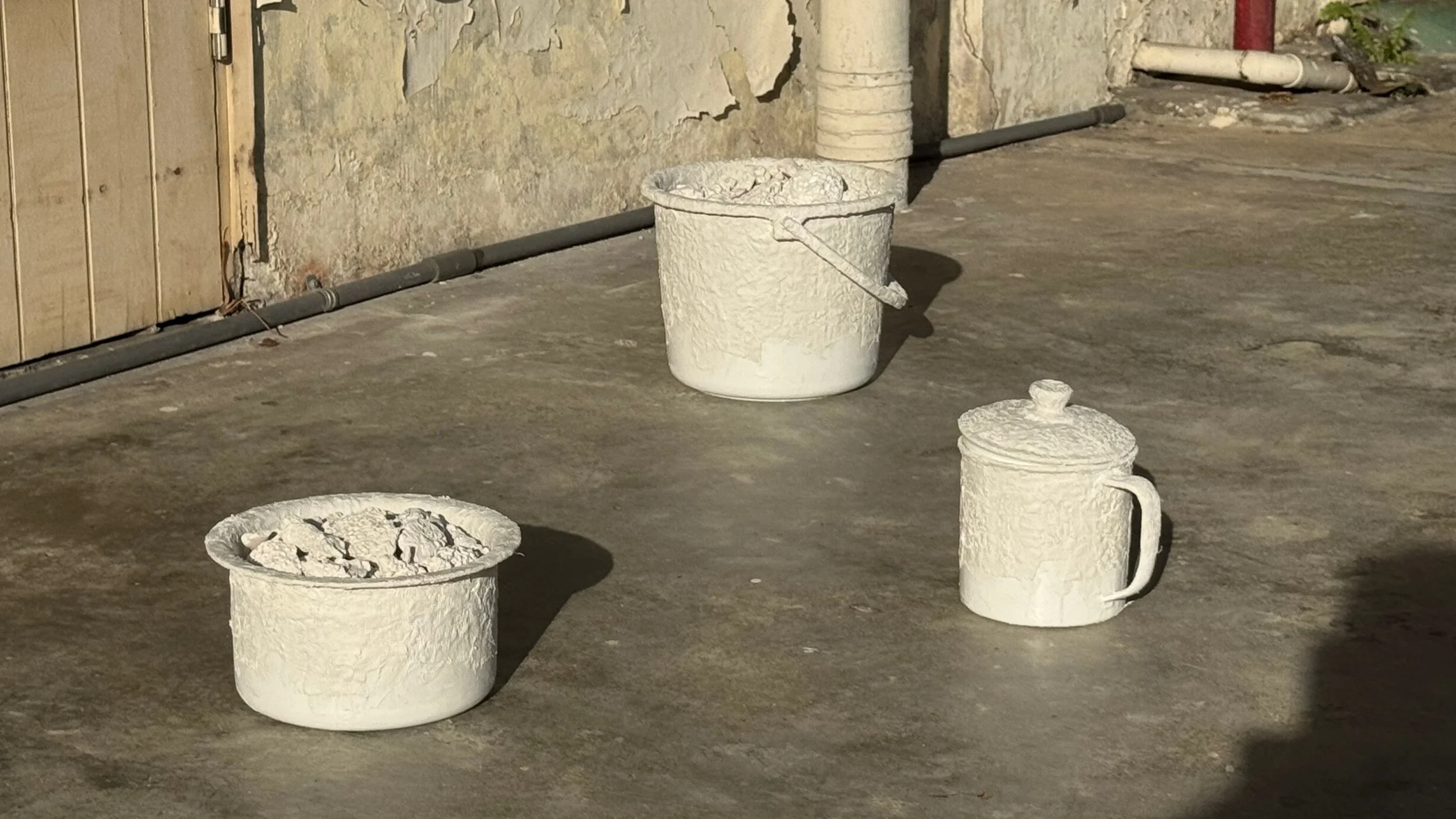
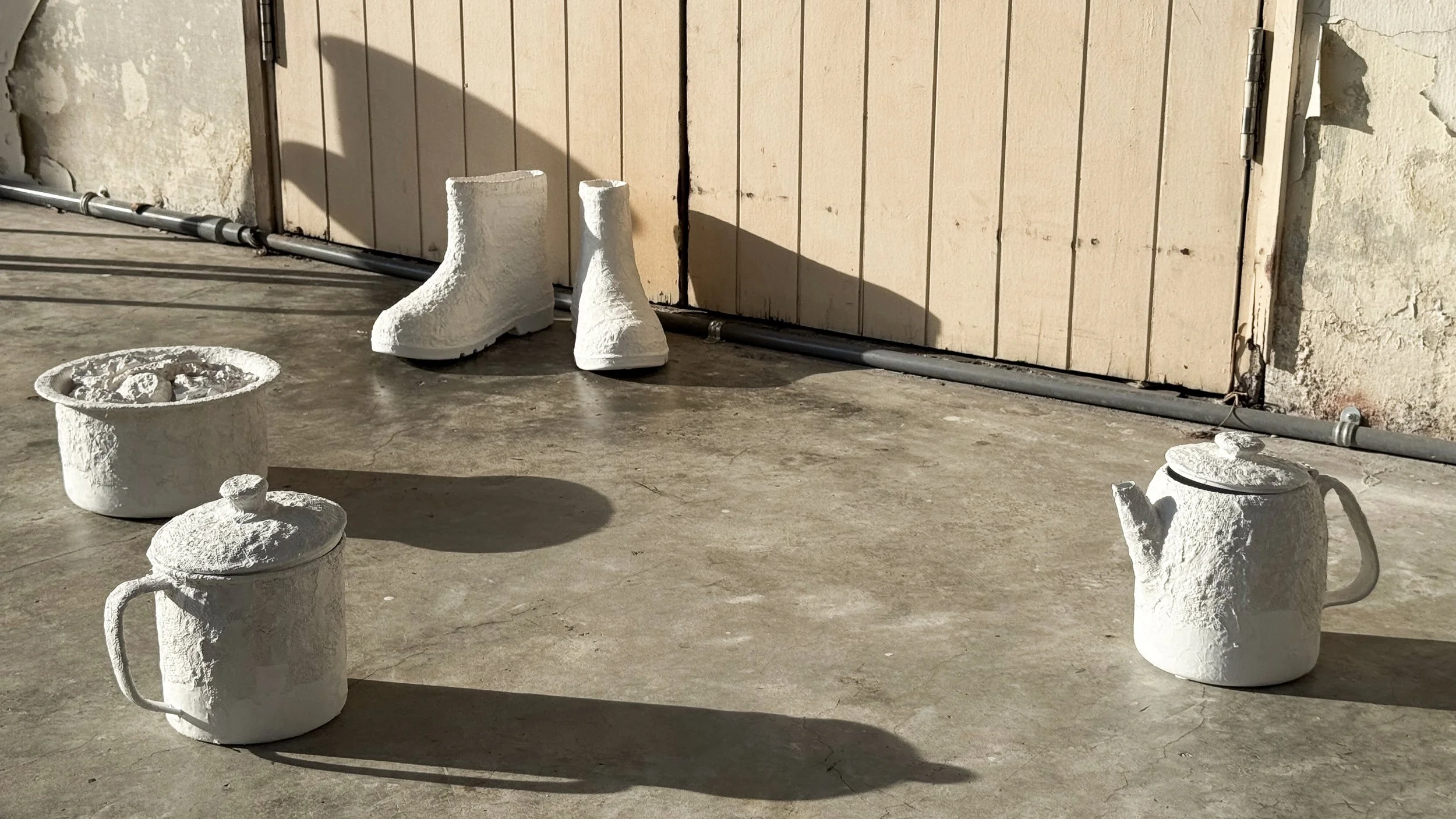
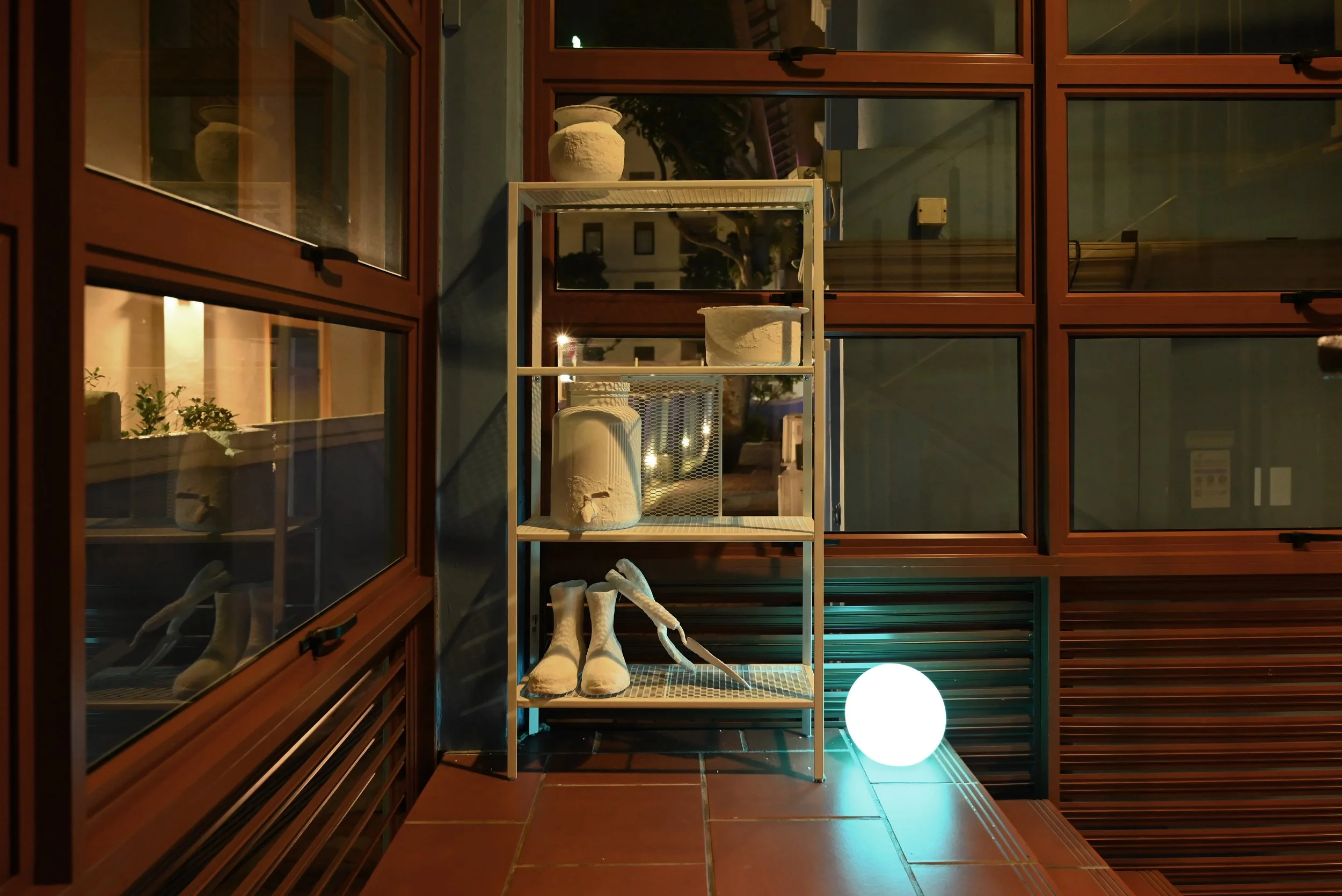
A collection of sounds playing from vessels scattered around the exterior courtyards of 42 Waterloo Street, each approximately 15mins, and looping. 2025.
We found the edge-world where the land meets with the sea. This is where the city pours out into the oceans through rivers and drains. Here, the stone walls that keep the city interiors dry are stained by tides. The wetness is also where mangrove forests are found half-decaying, and half-nourished by the decay. At the edge-world, the city breaks down into its weathered foundations.
Weathering the Blue House (2025) is a sound-based experiment playing up the “wetness” associated with the meanings of Beras Basah. The architectural restoration of the blue bungalow provides an experimental foil to explore the weathering implications of wetness, as alternative ways to recover the area’s rich landscape histories. Putting a playful twist to the distinctive bright cerulean blue that was given to the building in its restoration works—and which was historically used as the colour for painting blue skies—the sound installation invokes another landscape imaginary of estuarine floods, mangrove dampness, and monsoonal rains, pouring into the conserved architecture. The soundscape is assembled from audio recordings taken at the edge-worlds of Singapore’s intertidal coasts and mangrove forests, and from leakages inside the city.
________________________________________
03. Becoming Coral
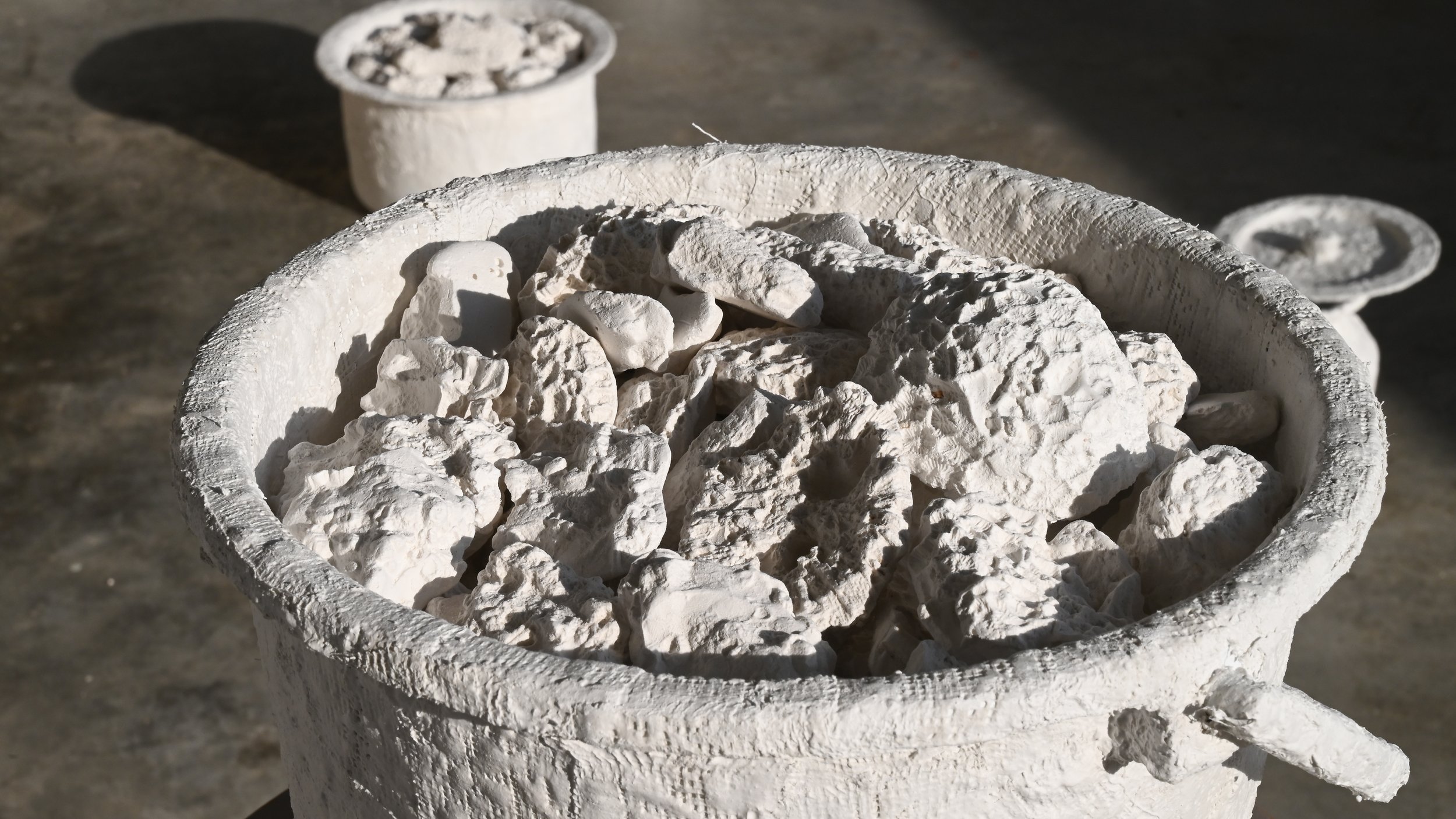
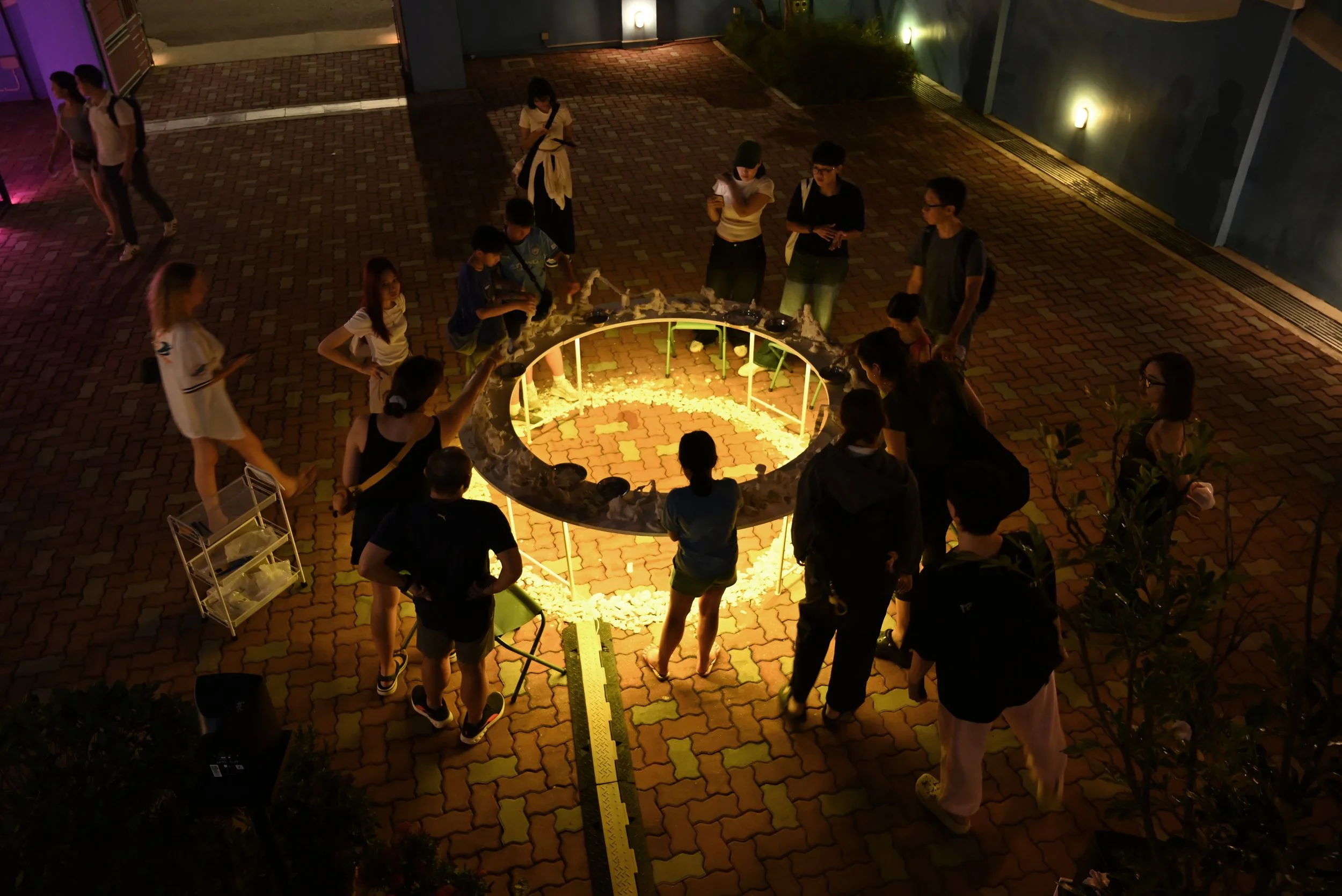
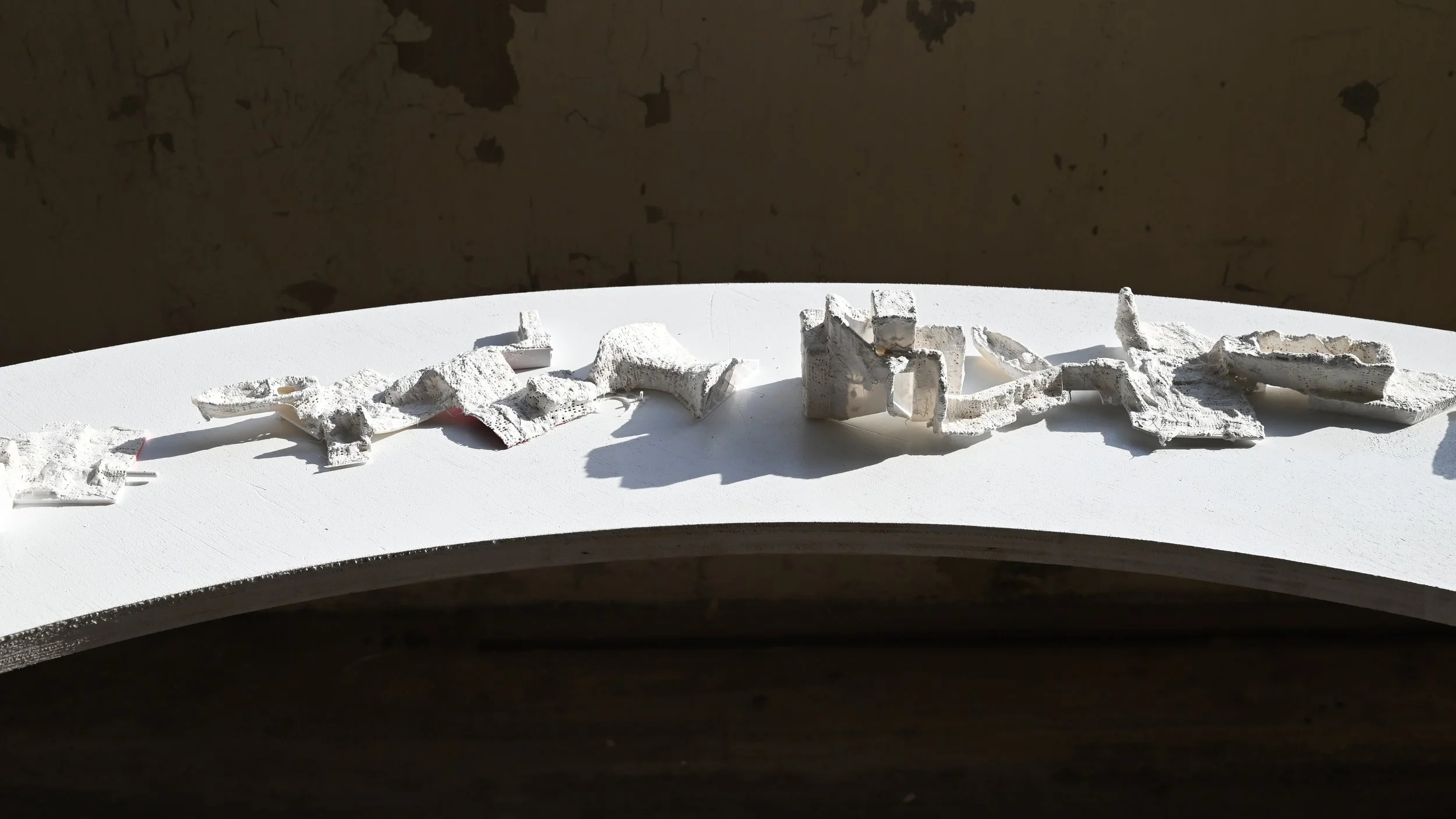
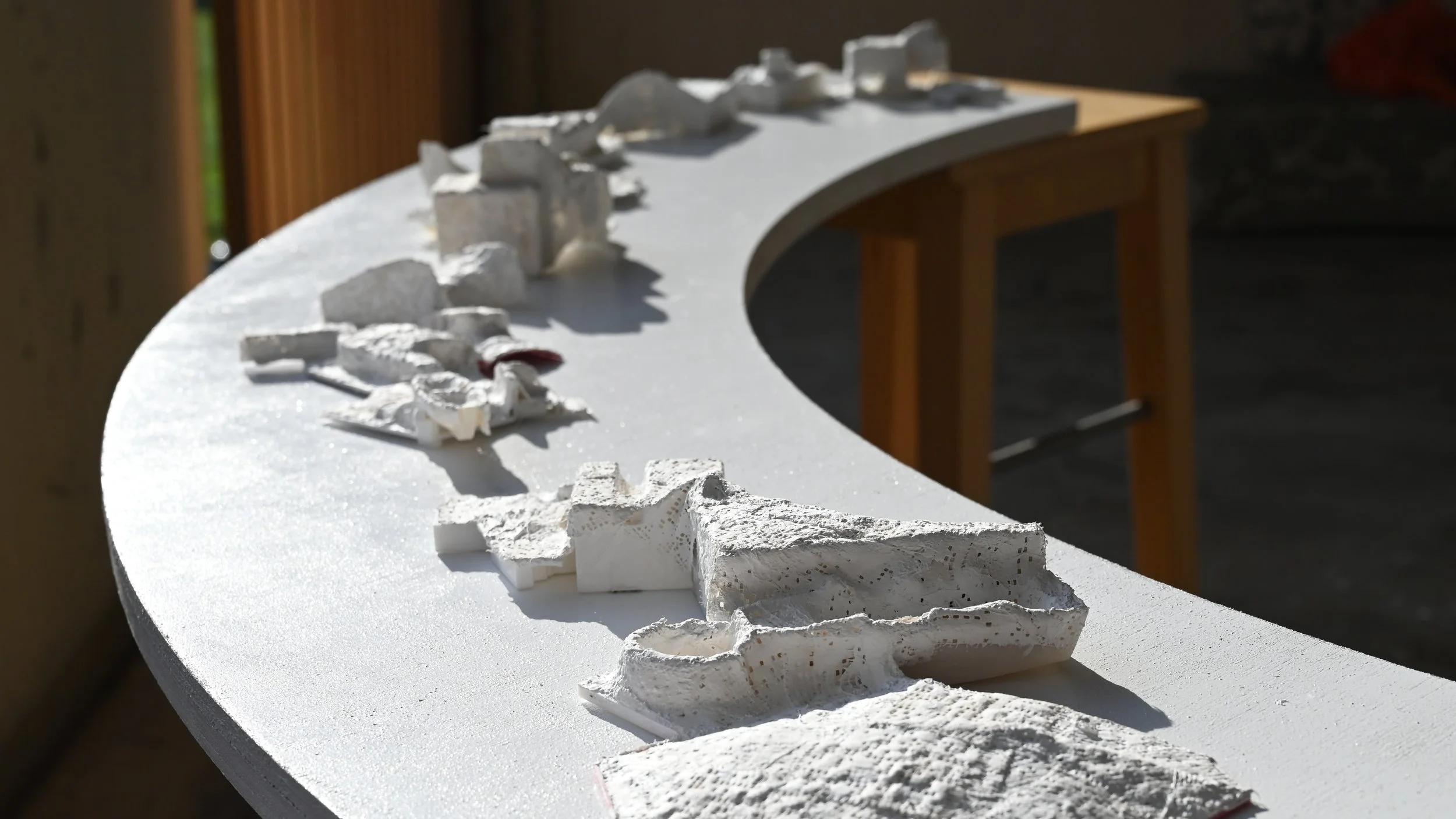
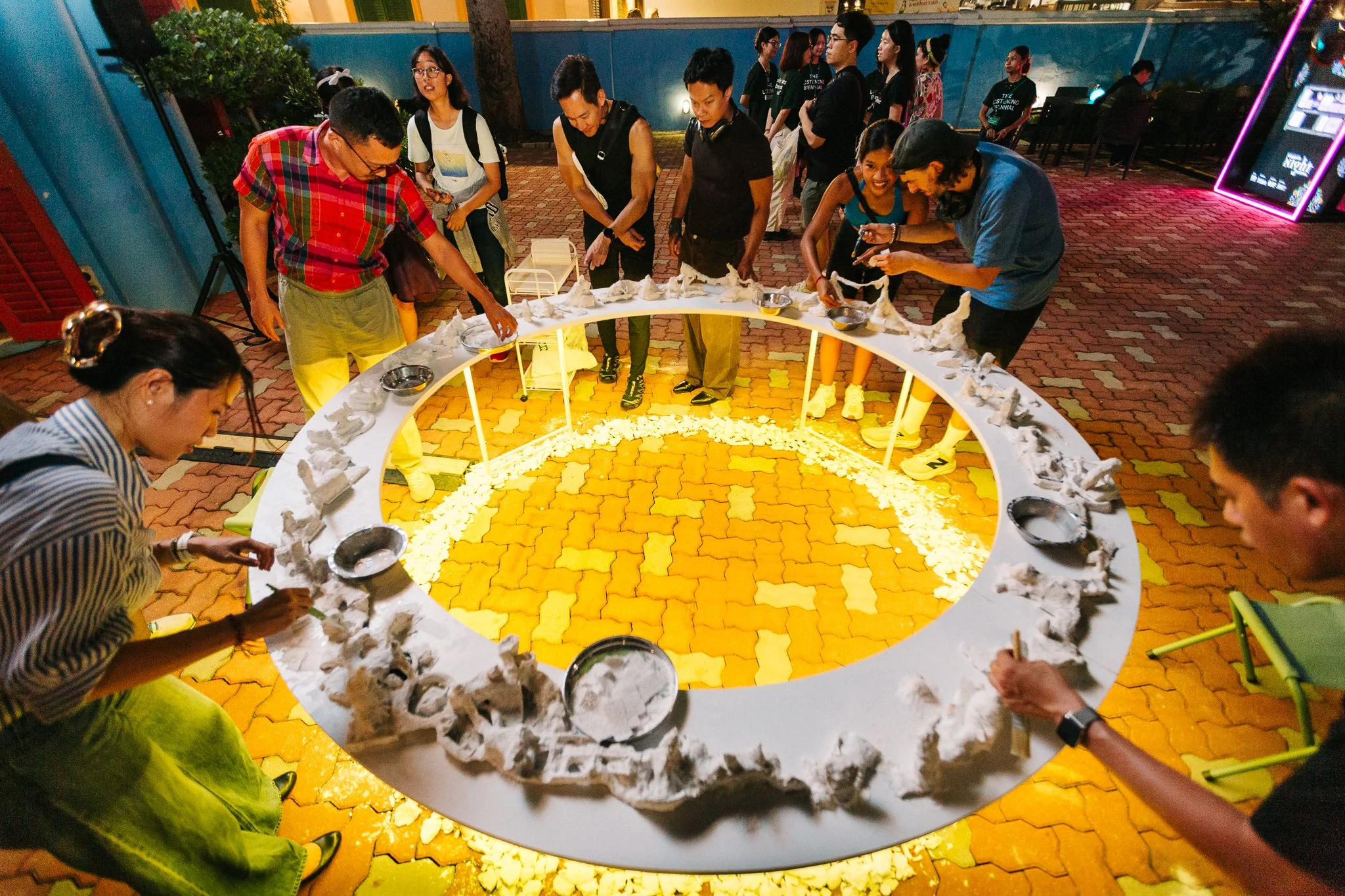
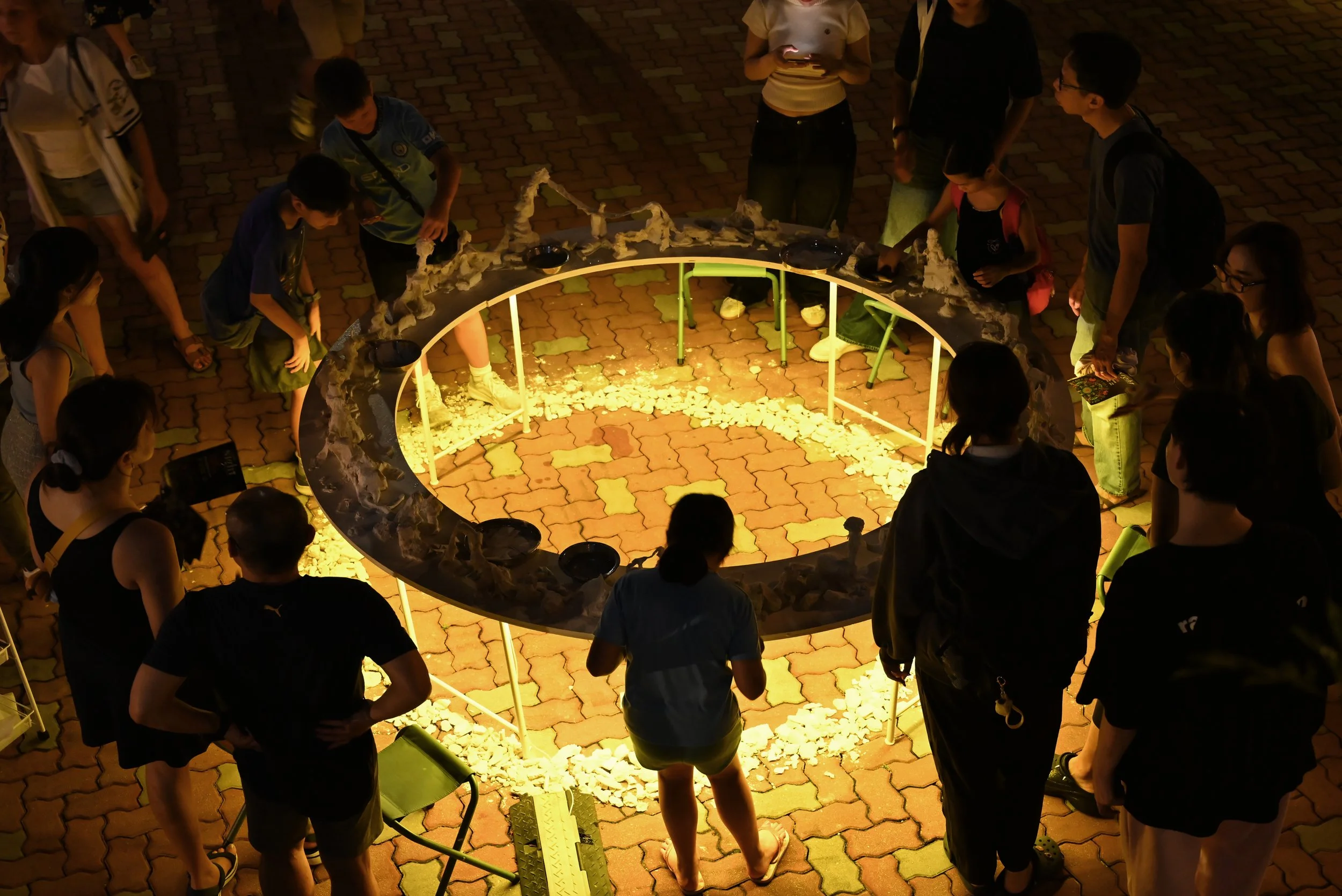
A performance of artmaking collaborators, using disposed architectural models, sand, cement and plaster, to simulate the slow processes of coral reef formation. The materials bring to mind possible connections between coralline skeletal matter, limestone, building cement, and most of the architecture of the city.
A reef island has appeared in the center of the bungalow’s garden compound. The island is being built atop a base of disposed architectural models, recalling the countless unbuilt experiments that go into the making of cities. On top of this bedrock—of broken city parts, a coral atoll grows little by little, registering the weather’s changes. With fingers, fellow collaborators attune to the micro-textures of the reef ground to know where to layer more sand, cement, and plaster: it is slow and laborious work.
Becoming Coral (2025) is a performance in making a hypothetical coralline ground, putting into question the materiality of calcium carbonate (or limestone) that is found in building cement, as it is also the skeletal structure of hard corals. The installation is a thought experiment bringing into closer proximity the material and bodily relationships between coral grounds and concrete cities. In performing (as if corals) the layered translation of weather(ing) data into the material ground, the installation is an invitation for attuning more carefully to the ebb and flow of the weathering worlds and calls us to rethink how to engage more ecologically with more-than-human worlds.
________________________________________
04. Public Program:
New Practices for Tidal Attunement
Friday, 29 August 2025,
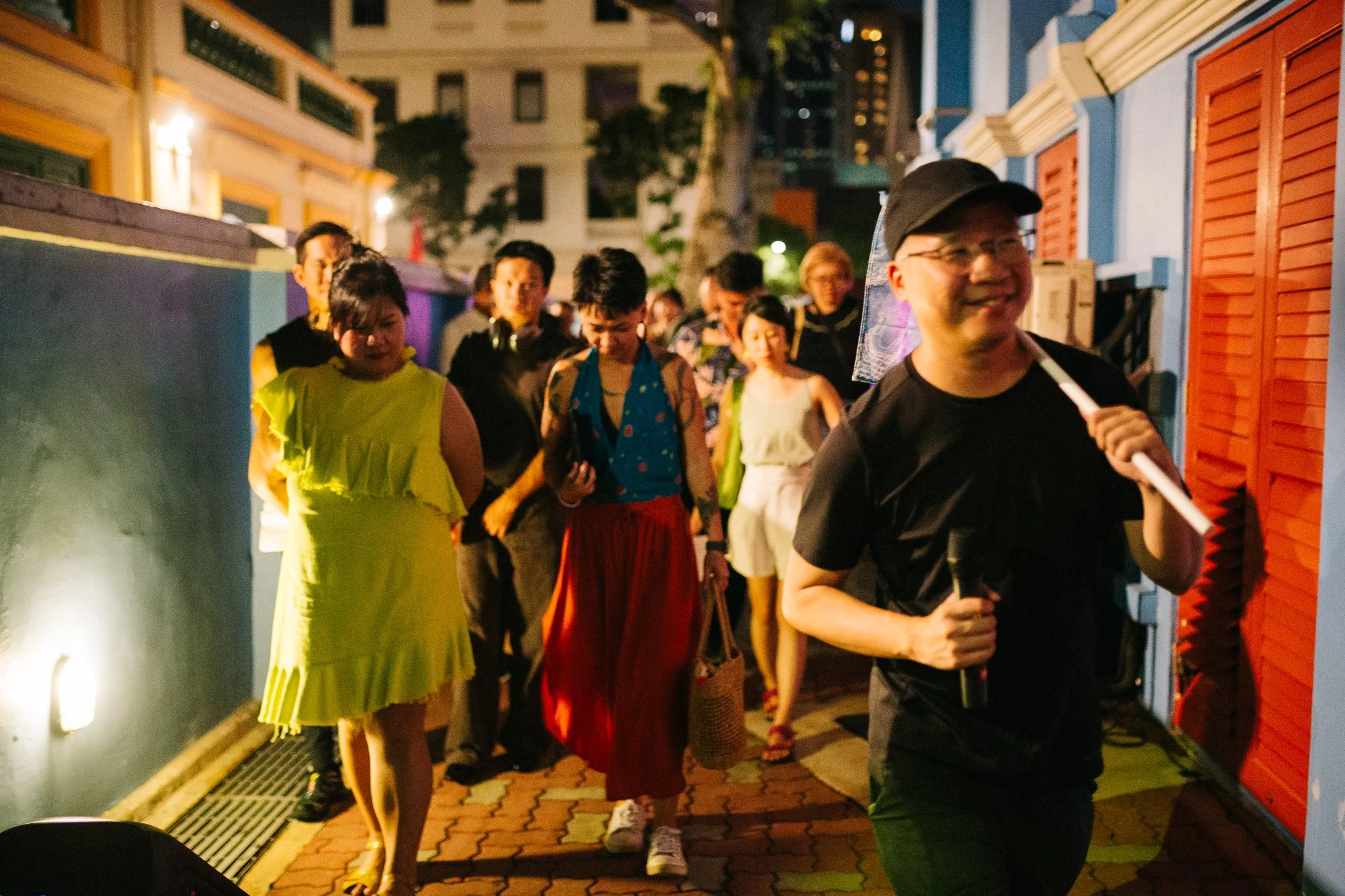
7-10pm, at 42 Waterloo Street