Stories of Ground:
Of Firefly Cartographies,
and Seed Palaces

By Wong Zihao and Liu Diancong, on show at The Strange Archive,
17 January-1 February 2026, curated by Adrian Tan.

The Strange Archive presents speculative artworks that reimagine the archive as a living, contested space rather than a static repository. To make strange is to see again: here, the archive signals a site of care, continuity, and labour that remains porous and reflexive, shaped by omission and desire. This first iteration, developed for Singapore ArtWeek 2026 at Tanjong Pagar Distripark, lays the groundwork for a long-term curatorial and research platform exploring how forgotten stories, unrealised projects, and obscured memories may be reactivated through exhibition making.

In 1966, a newspaper article reported a curious sight occupying the HDB corridor of a block of flats in Kallang. Lining the narrow external corridors were cages of chickens and ducks. On top of the cages were cleverly placed flowerpots: only the plants were visible from behind the parapet walls when viewed from the ground floor. Probably the incessant clucking went on throughout the day, with the chickens having nowhere to run about other than in circles in their hot, cramped high-rise habitats. The ground—as imagined by past-farmers—was evidently not the same as before, and in its newly modern high-rise architectural form, revealed indeed a lack of ground. In the high-rise city, ground has been reduced to take the meaning and materiality of impervious concrete forms, surface, or structure.

For Singapore ArtWeek 2026, Superlative Futures revisits these forgotten meanings of ground in the group exhibition The Strange Archive, curated by Adrian Tan. Here they gather and reconstruct possible Stories of Ground from newspaper fragments, cartographic reinterpretations, and speculative seed architectures. Old maps of Singapore’s landscape are re-presented to evoke alternative environmental histories, and speculative seed architectures are constructed to hold within them new “memory palaces” that altogether recall the ghostly substrate of ground from beneath the rigid surfaces of the modern city. The work highlights overlooked local histories that continue to grow in the interstices of urban life, proposing speculative worlds rooted in the material traces of place.
Fireflies (2025)

Before there was the map, the ground was not merely an undulating surface for scoring the architectural iron-grid of urban planning. The 1836 “Map of the Town and Environs of Singapore”, drawn by the renowned French lithographer Jean-Baptiste (J. B.) Tassin, based on the survey of Singapore’s pioneering colonial architect, and superintendent of public works George Drumgoole Coleman, represents the earliest instance of cartographical disciplining of the island-city’s landscapes—and perhaps too, its ecological environs.

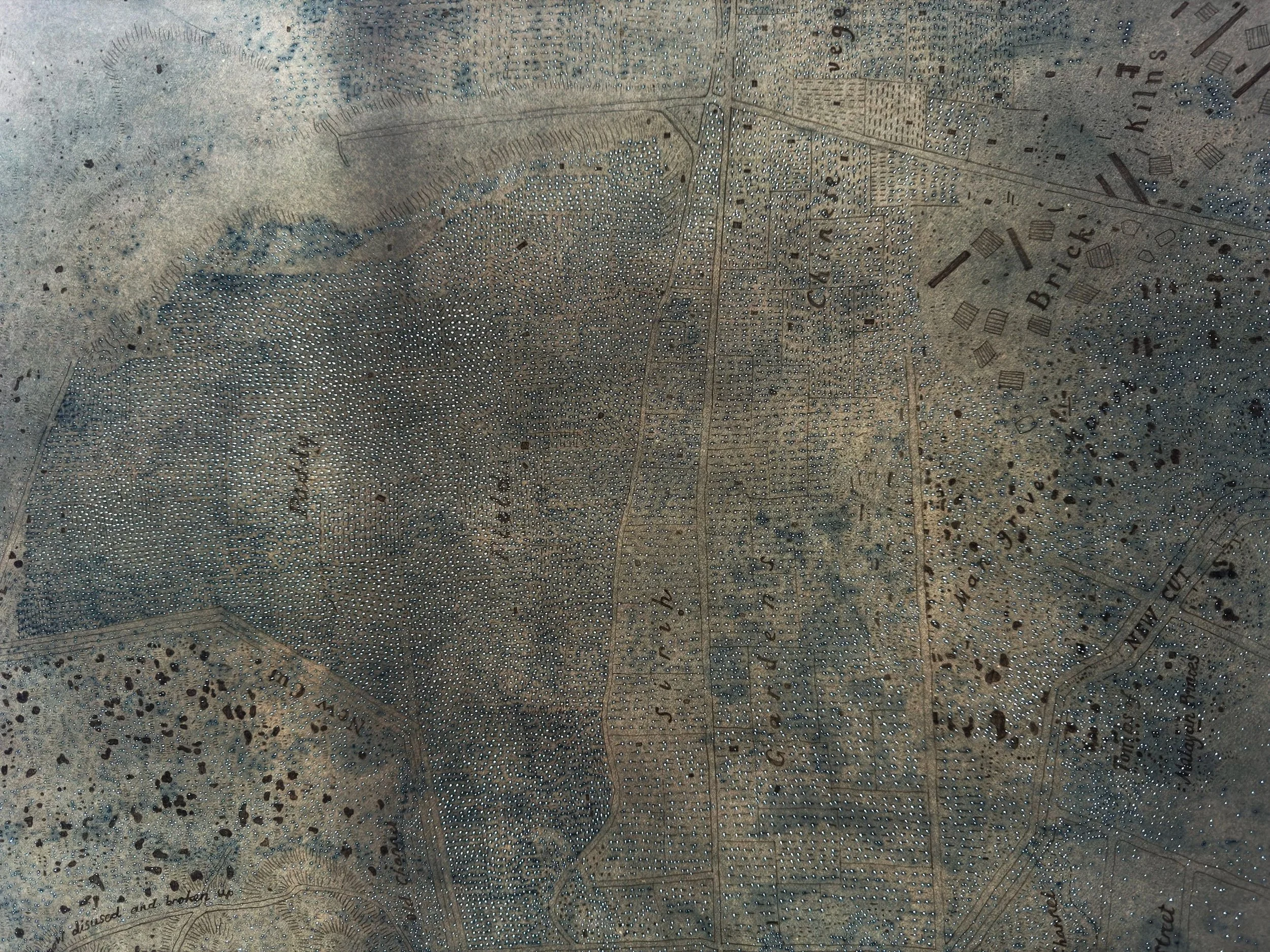
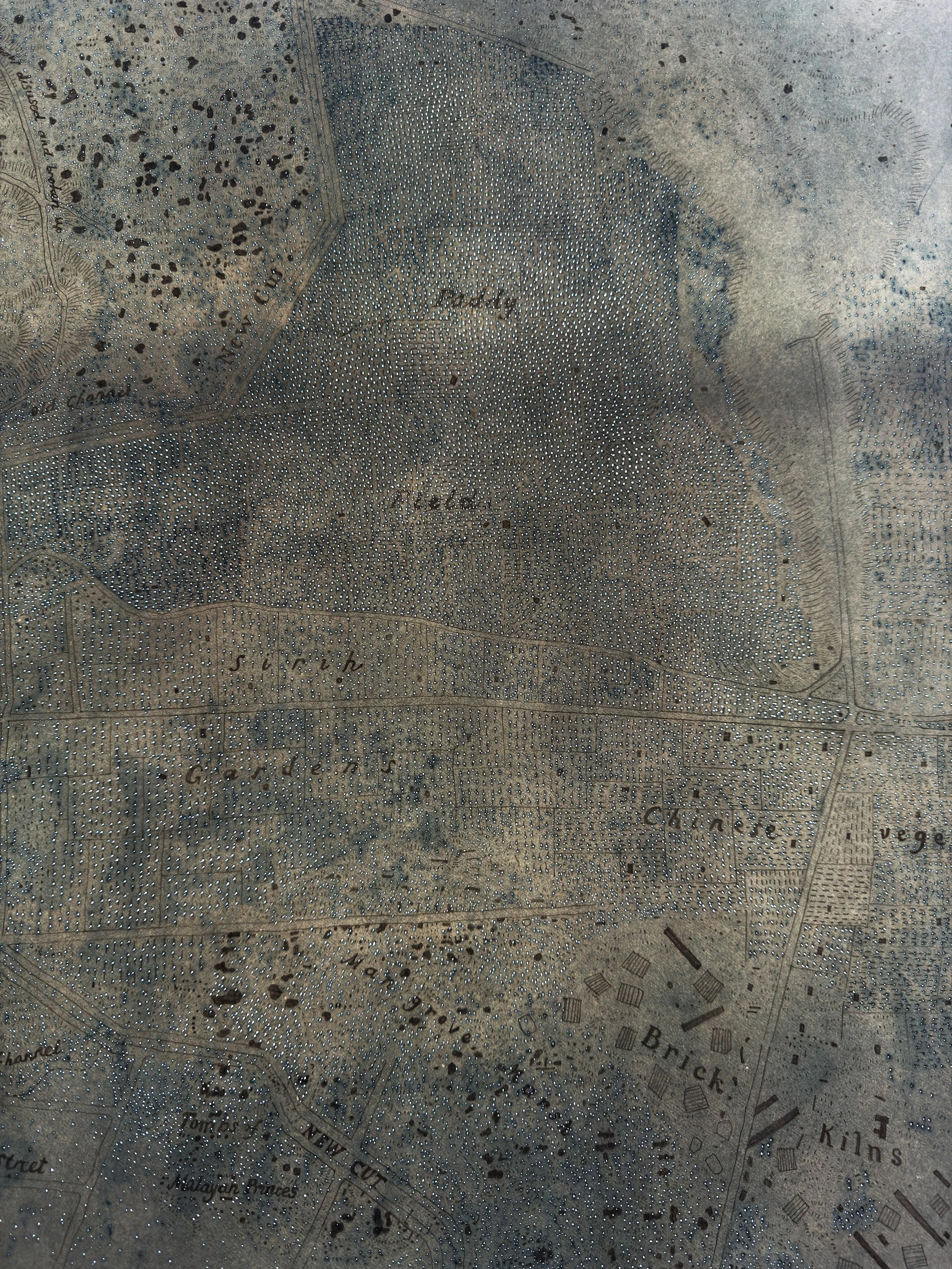
The artwork Fireflies constitutes a pair of backlit perforated drawings, or rather, re-drawings of the 1836 Map, to return a different imagination of the ground before there was the map. Contesting the Map’s focus on the comprehensive survey of engineering feats: of gridded streets, cultivated hills, plantation grounds, and rechannelled rivers, the diptych zooms instead to provide a view of other details—and of other grounds, lost in the Map’s story of progress. The pricked drawing surfaces ascribe a different imagination of the city centre’s dry, stable, and habitable ground to be rather porous, and seeping with the wetness of paddy fields flooded by monsoonal rains, and mangrove marshes shifting in and out of the tides of past rivers. The lighted constellations recall the fireflies of wet landscapes, believed as well to be messengers that connect living to ghost worlds, mediating between the environmental crisis of present times with alternative pasts and speculative futures.


Seed Palaces (2025)

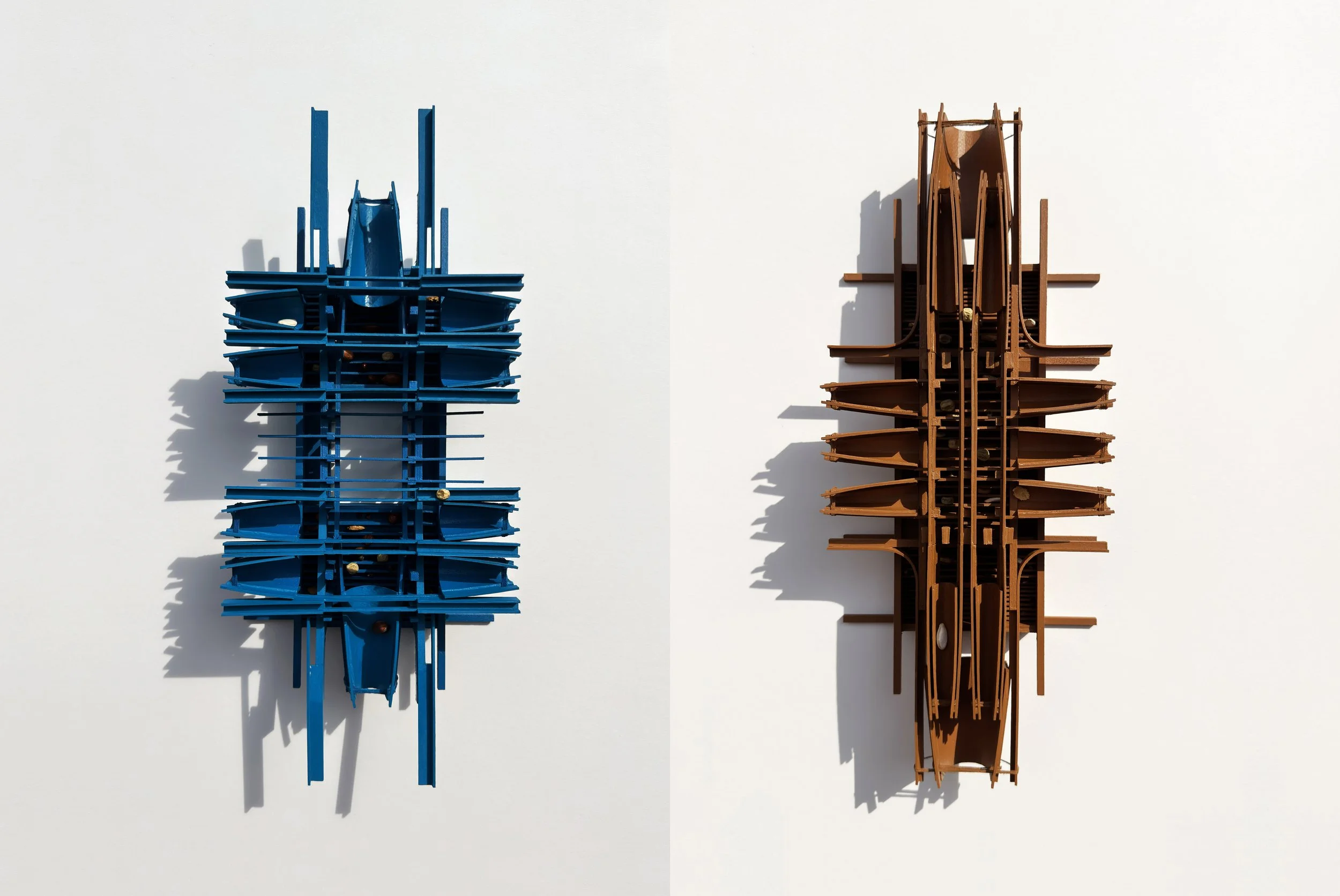
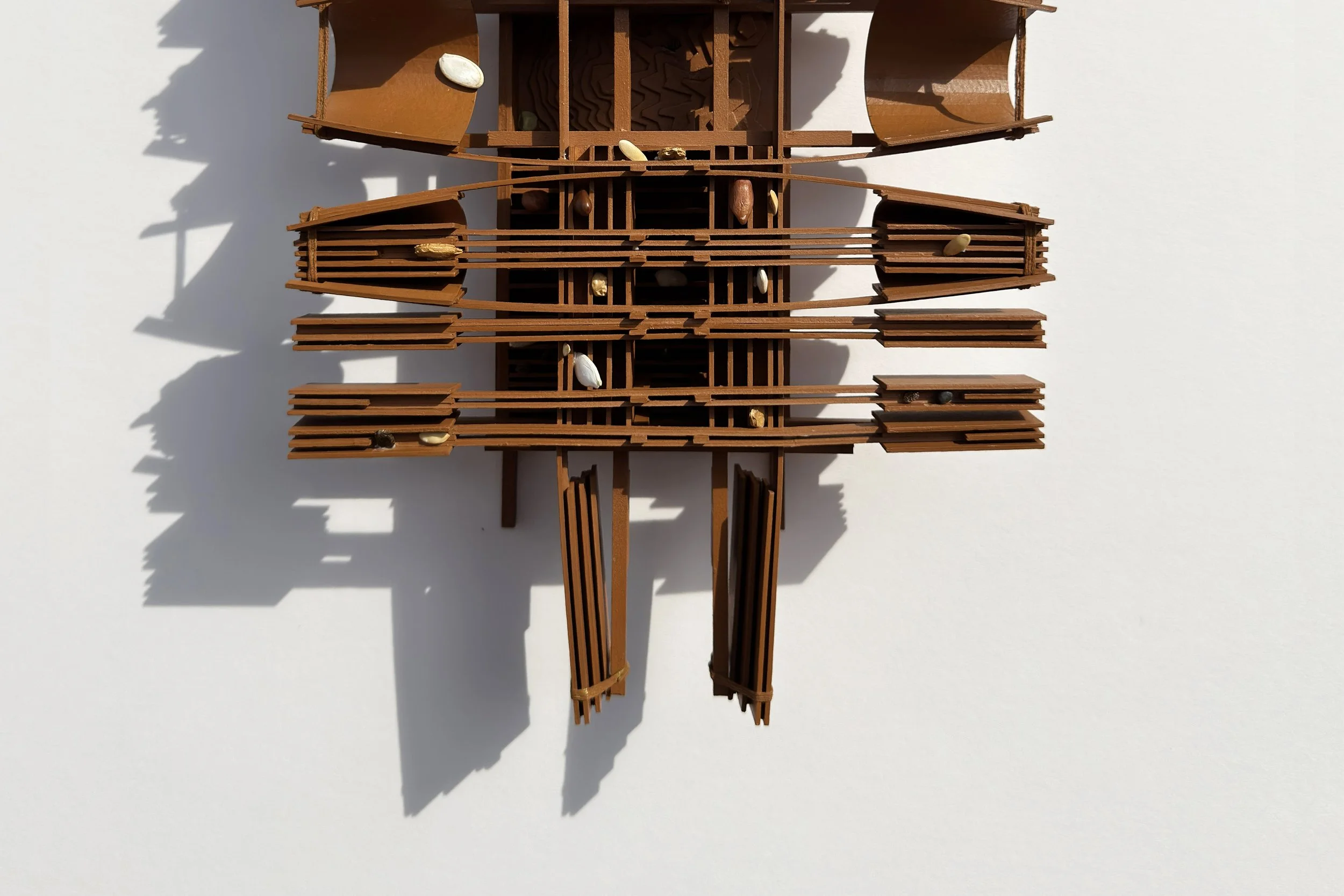
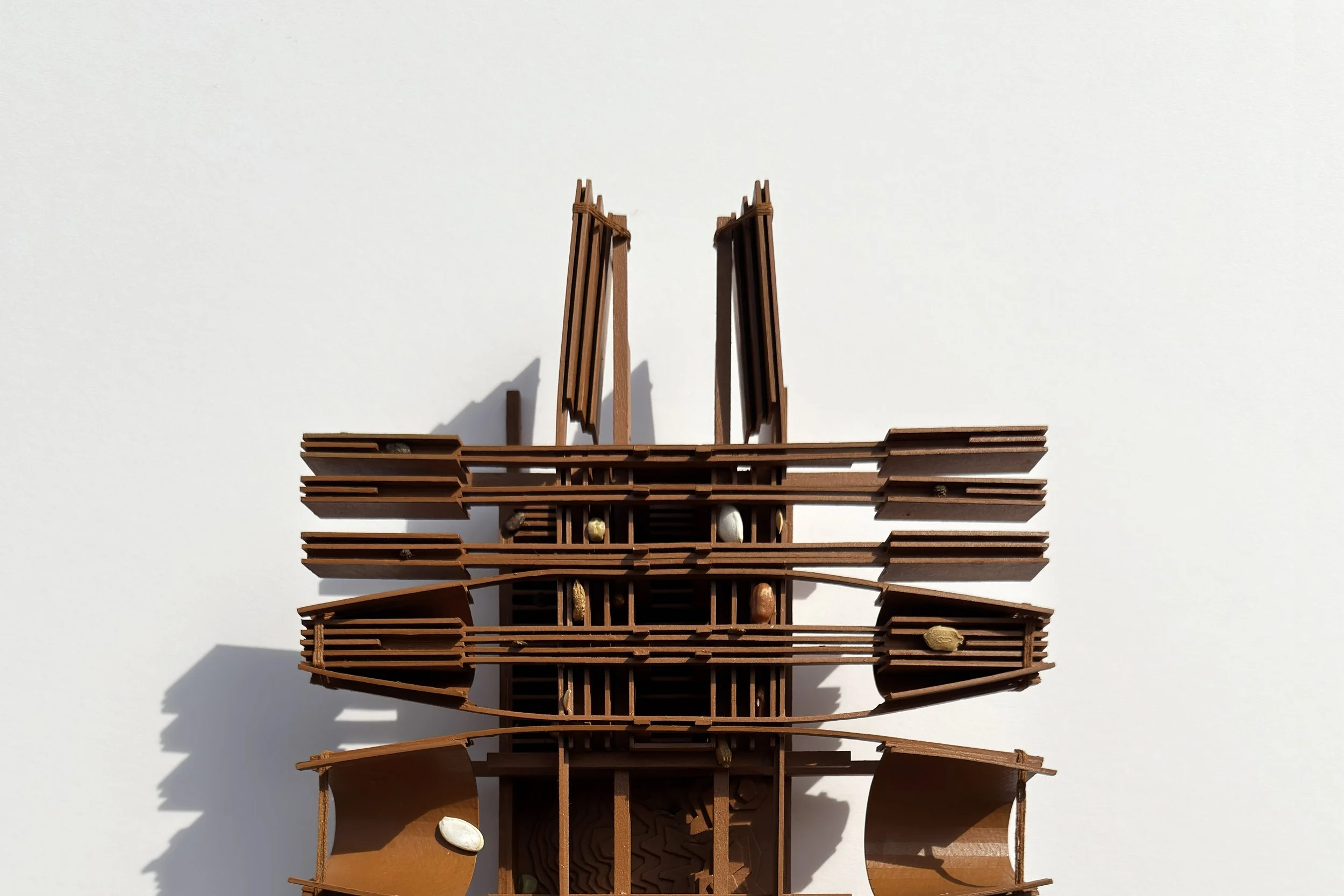
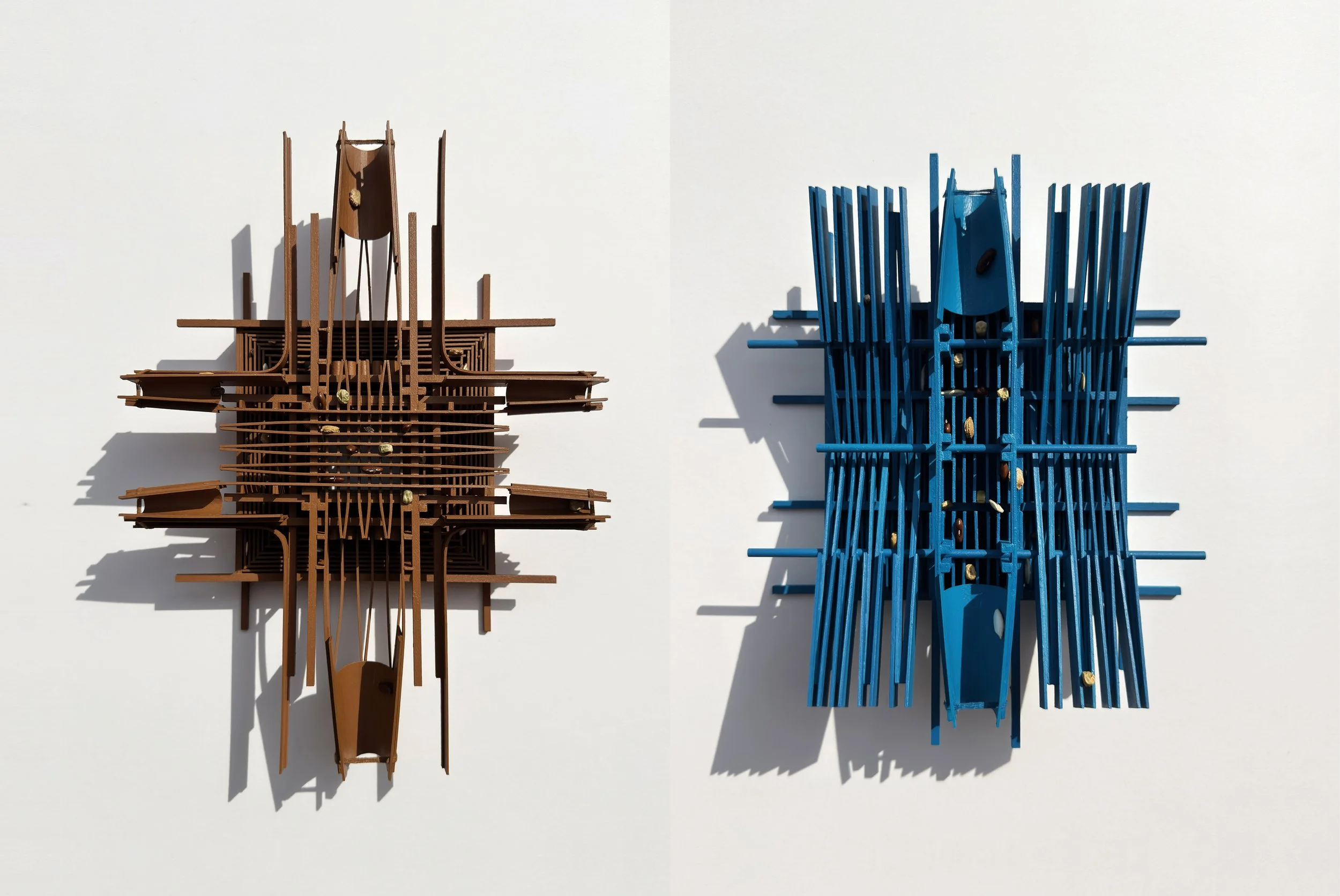
Made as architectural models, yet they can also be speculative design artefacts made to reimagine a world where humans build architectures for nonhuman subjects. The Seed Palaces call to mind seed vaults built all around the world functioning to physically preserve the genetic memory of seed matter in permafrost conditions, in anticipation of doomsday global ecological and food crisis. Here, the miniscule seed architectures extend these anticipatory practices to other forms of archival necessary for the present time, in cultivating new memory palaces around the substrate of ground, and other seed matter(s). The artefacts act as memory “collages” of past and future grounds, connecting stories of ancient fruit orchards and forbidden hills, to colonial seed collections and experimental gardens, and to future heirloom seed vaults on the International Space Station.    

Next
Next

Stories for Slower Futures [for Another World is Possible]